

Corporate volunteering means giving employees paid or organized time to serve a charity or community group, either as a one-off team day or as a recurring partnership. In Singapore, the simplest route is to pick a real need, book a charity that already hosts groups, brief your team properly and claim the tax deduction where your activity qualifies. This guide covers the activity options, the booking rules charities publish, the money side and how to make the day count for both the beneficiaries and your team.
TL;DR
- Volunteering together can lift motivation and team unity, according to the National Council of Social Service, and it works best when the task is real and the charity needs it.
- Good starting points: food packing, home rehabilitation, litter clean-ups, befriending, digital skills coaching for seniors, care-pack packing and pro-bono skills support.
- Book early. Charities publish lead times of six weeks to 60 days and caps on group size, from 5 volunteers per home to 50 per shift.
- Businesses may claim a 250% tax deduction on qualifying expenses for volunteering with Institutions of a Public Character (IPCs), under conditions and caps.
- Name one internal lead, brief the team, and debrief afterward. That is what separates a bonding day from a photo opportunity.
Table of Contents
- Why companies volunteer together
- Corporate volunteer activities that work in Singapore
- How to find and book a charity partner
- What to check before you commit
- The tax side: the Corporate Volunteer Scheme
- Running the day so it helps the charity and bonds the team
- Measuring impact
- Our perspective
- Combining giving back with team building
- Plan your CSR and team day with us
- FAQ
- Sources
Why companies volunteer together
The business case is simple. NCSS notes that studies show regular volunteering boosts employee motivation, fosters team unity and builds a culture of care. Colleagues who pack food boxes side by side see each other outside their job titles. A finance analyst and a sales director end up solving the same practical problem: how to get 400 bundles sorted before the van arrives.
There is also a community case. Charities depend on volunteer hours. The Food Bank Singapore’s annual report records that 12,255 volunteers contributed 37,262 hours in 2024. A corporate team that turns up prepared and on time is a meaningful part of that effort.
For HR leaders, the goal usually combines three things: team cohesion, employer brand and a CSR story that holds up. Volunteering delivers all three only when it is planned with the charity rather than dropped on it.
Corporate volunteer activities that work in Singapore
The best activities are real, contained and suited to people who may only be present for one session. Here are the types Singapore organizations publish for corporate groups.
Food and care packing
The Food Bank Singapore’s Joy in Every Bundle lets companies pledge food bundles, pack them into bags and support door-to-door distribution. Its annual report also lists sorting and packing food, food drives and fundraising as ways corporate teams can take part. Singapore Red Cross lists care-package packing and delivery, group blood donations, arts-and-crafts workshops and excursions among its corporate options.
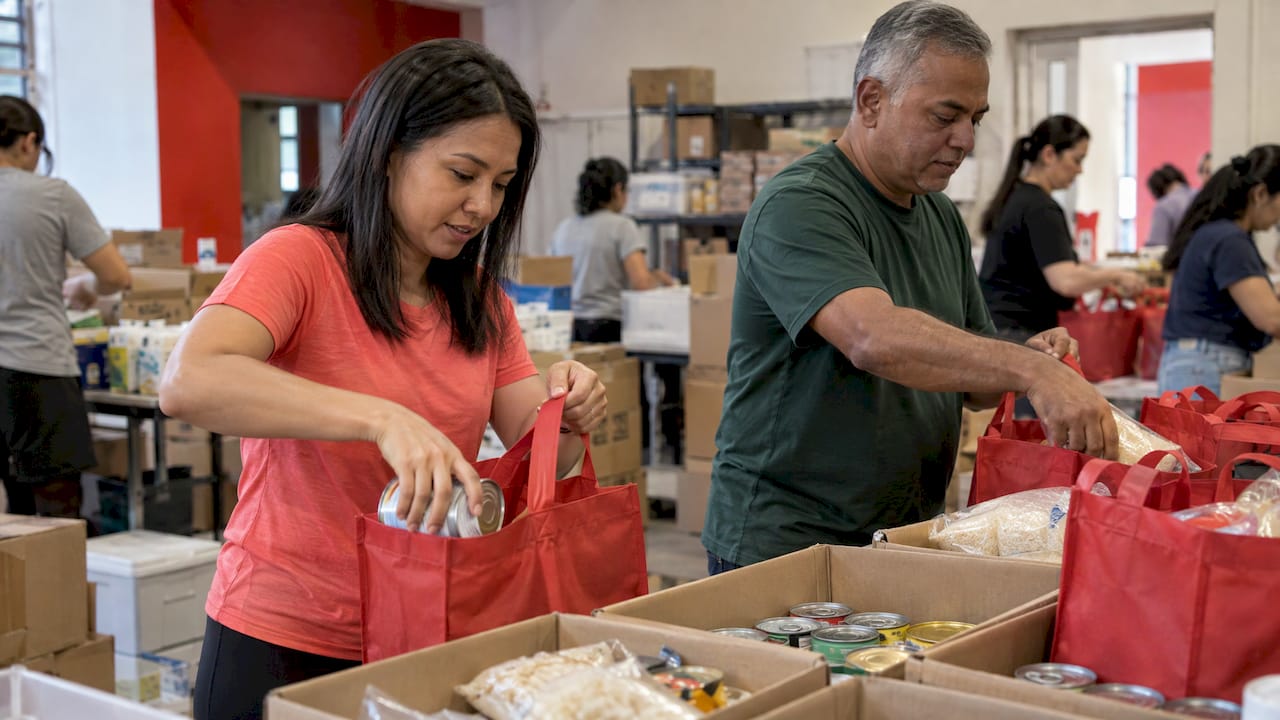
This format suits large teams, short time slots and mixed seniority, because the work is visible and nobody needs special training.
Home rehabilitation and clean-ups
Habitat for Humanity Singapore runs Project HomeWorks, where volunteers help rehabilitate homes. Corporate groups need at least 60 days’ advance booking, a $1,800 donation per home session, and a limit of 5 volunteers per home. Its UnLitter Red Dot sessions for corporate groups run on Fridays from 3:00 pm to 5:00 pm with six weeks’ advance booking and involve donation support.
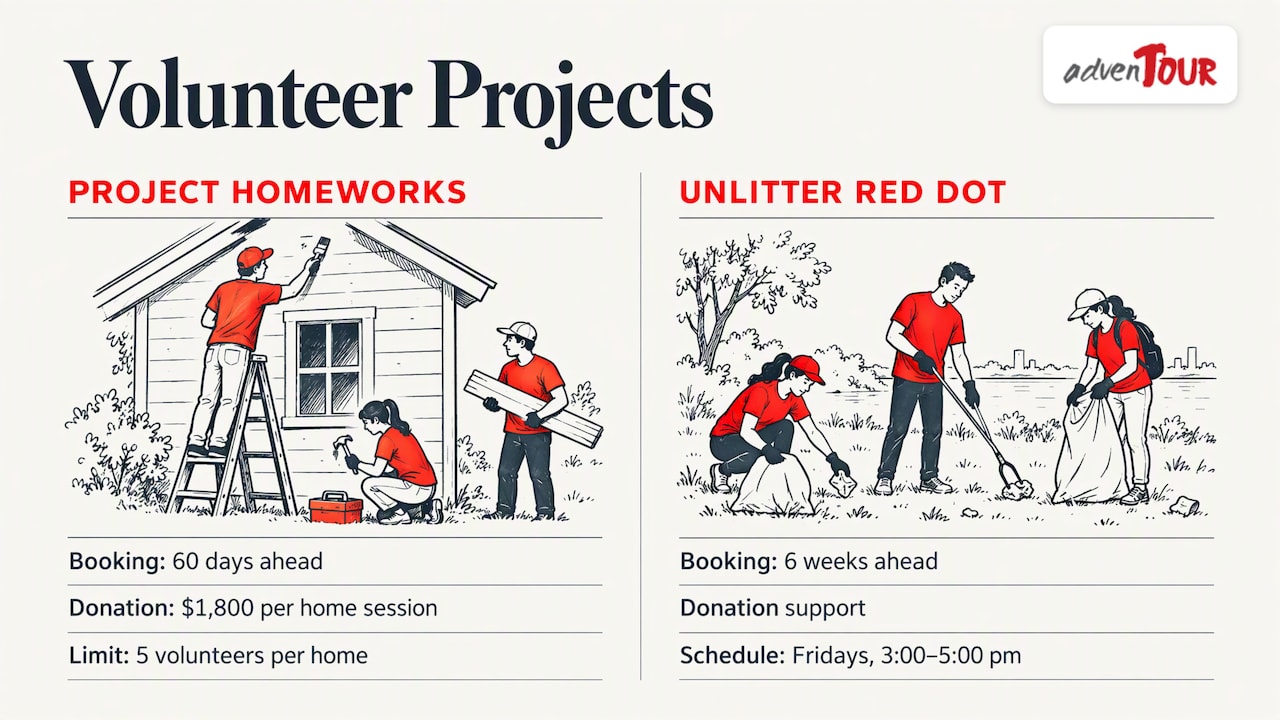
These are hands-on, outdoors and physical, so they suit teams that want to work with their hands rather than sit in a room.
Skills-based volunteering
Skills-based activities put your professional strengths to work. DigitalForLife’s profile of CrimsonLogic describes employees who taught seniors to use mobile devices, messaging, apps, government services and Singpass in partnership with Anglican Senior Centre. NCSS also lists befriending, event and programme planning, professional skills support, administrative help and pro-bono consultancy as suitable volunteer activities.
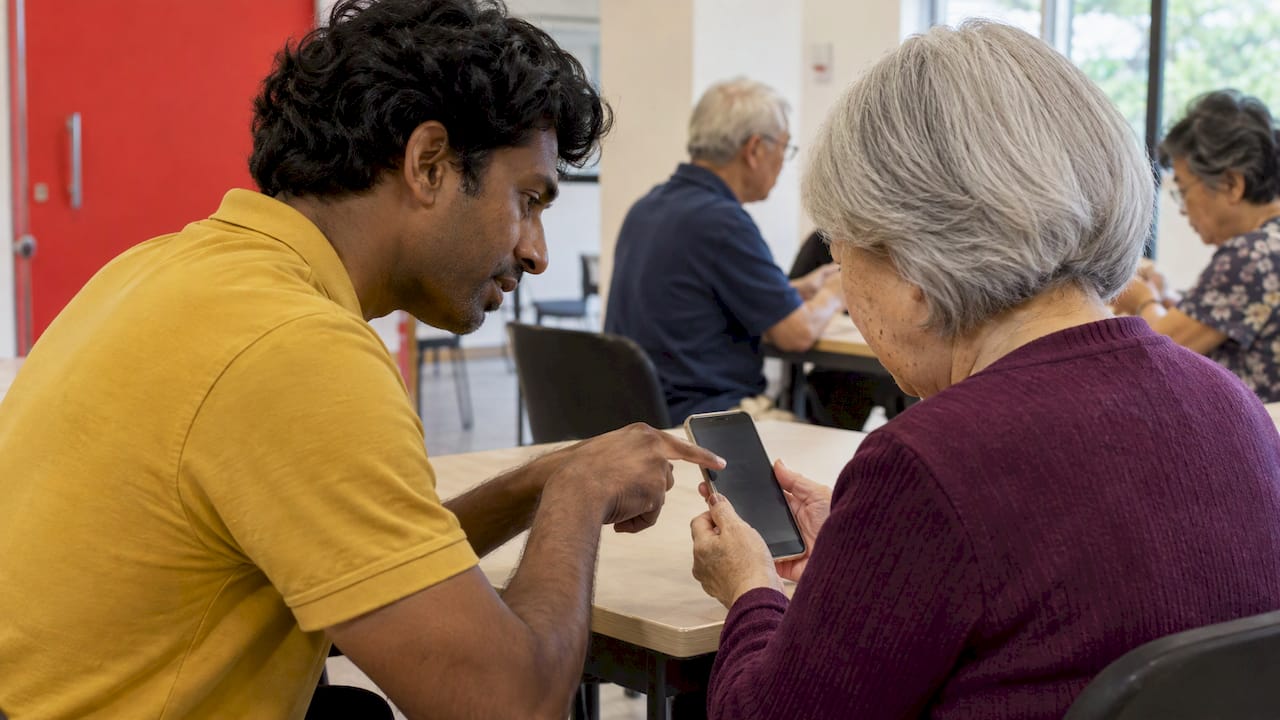
A marketing team can rework a charity’s donor newsletter. An IT team can help with devices. A finance team can review a small charity’s budget template. The deliverable is small, real and finished within a session or two.
Matching activity to group size
| Group size | Good fit | What to check |
|---|---|---|
| Up to 5 | Home rehabilitation | Donation per home, 60 days’ lead time |
| Up to 20 | Care-package packing, arts-and-crafts workshops, excursions | Per-activity cap set by the charity |
| 20 to 50 | Kitchen shifts, food sorting and packing | Shift capacity, age and footwear rules |
| 50 and above | Food bundle drives, multi-site clean-ups, split into sub-teams | Several time slots or sites |
The caps come from the charities themselves. Red Cross states that generally up to 20 people can join each activity.
How to find and book a charity partner
You do not need to start by cold-emailing charities. Several national bodies broker the match.
- NVPC: companies can contact it to explore Project V, Flexi Volunteering or Giving Circles. Project V is a structured programme co-led by NVPC, NCSS and the SG Cares Office to encourage regular, meaningful corporate giving.
- SG Cares Volunteer Centres: MCCY says they operate in all 24 towns and broker partnerships between volunteer demand and supply at town level. They are a good fit when you want a local project near your office or your staff’s homes.
- SBF’s VolunteerInc.: the Singapore Business Federation says many businesses, especially SMEs, lack the structure or connections to sustain volunteering, and VolunteerInc. offers structured support and trusted partnerships.
- Charities directly: many publish a corporate sign-up page, such as TOUCH, which lists a group enquiry email and phone line for corporate sign-ups.
NCSS reports that Project V’s 2023 pilot connected nearly 2,000 volunteers with 17 social-service agencies and SG Cares Volunteer Centres, recording over 6,100 volunteering hours, and that companies can use structured, recurring partnerships rather than one-off events. If your budget and calendar allow, a quarterly slot with one charity usually beats four unrelated events.
NVPC adds that charities can co-create activities suited to a company’s capacity and interests. Ask what they actually need this quarter, and shape the day around the answer.
What to check before you commit
Before you pick a date, run through this list with the charity.
- Group rules. Willing Hearts, for example, asks groups of four or more to book in advance, with a maximum of 50 people per time slot in its kitchen. It also lists age requirements, a four-hour minimum commitment, closed-toe shoes, and hygiene and safety requirements on the same volunteer page. Share these with staff before sign-up, not on the morning.
- Lead time. The published examples above range from six weeks to 60 days. Build in time for internal approval and headcount confirmation.
- Costs. Some charities ask for a donation or a pledge, such as the per-home donation for Project HomeWorks. Treat it as part of the event budget.
- Accessibility and timing. A Friday 3:00 pm slot suits some teams and not others. Check mobility needs, shift lengths and how people will travel there.
- Safety and vulnerable groups. Where staff will work with children, seniors or vulnerable adults, ask the charity what screening, briefing and supervision it requires, and follow its rules rather than your own.
- Single point of contact. Name one internal lead who talks to the charity, so the charity does not field twelve emails from twelve colleagues.
The tax side: the Corporate Volunteer Scheme
If your team volunteers with an IPC, the cost may be deductible. IRAS states that businesses may claim a 250% tax deduction on qualifying expenditure incurred from 1 July 2016 to 31 December 2029 for employees volunteering or providing services to IPCs, subject to the scheme’s conditions and caps.
Key points from the same IRAS page:
- Since 1 January 2024, qualifying activities include mutually agreed virtual work and work outside IPC premises.
- Qualifying expenditure includes basic wages and related expenses incurred solely for providing services to an IPC.
- Caps apply: $250,000 per business per Year of Assessment and $100,000 per IPC per calendar year.
- Businesses may choose fixed hourly rates for wage expenditure: $10 per hour for general volunteering and $20 per hour for skills-based volunteering.
This is also a practical reason to design skills-based sessions. Check the scheme’s conditions on the IRAS page, and ask your tax adviser or finance team whether a specific event qualifies before you rely on the deduction. Note too that the charity must be an IPC for the scheme to apply.
Running the day so it helps the charity and bonds the team
Volunteer days go wrong in predictable ways: too many people, vague tasks, no briefing and no follow-up. The Food Bank Singapore’s volunteer guide for bundle events is a useful model. It sets out a briefing, teams split across unloading, packing, organising and distribution, assigned delivery groups, distribution do’s and don’ts, and a closing debrief and feedback session.
Copy that structure for any activity:
- Brief. Explain who the beneficiaries are, why the work matters, and the safety and conduct rules.
- Split into small teams with clear roles. Mix departments and seniority on purpose.
- Keep tasks contained. One finished output per team gives people a shared win.
- Let the charity lead. Your staff follow its instructions and do not improvise.
- Debrief. Ask the team what they noticed, and ask the charity what worked and what to change next time.
The Straits Times reported in October 2024 that Singapore charities improve the volunteer experience by customizing roles, stating requirements clearly, using regular debriefs and close supervision, and giving volunteers leadership opportunities. An SMU Lien Centre report on the social-service sector recommends regular check-ins, social gatherings that build belonging and communication across the volunteer lifecycle. For companies, that translates into follow-up: send the team a short note on what the event achieved, and offer a repeat session to those who want one.
Measuring impact
Align volunteering with your company values, your workforce’s interests and your strategic priorities. SBF’s VolunteerInc. programme describes learning frameworks to measure and evaluate impact. Keep your own measures simple:
- Hours given and number of participants, including repeat volunteers.
- What the charity received: bundles packed, homes rehabilitated, seniors taught.
- A three-question pulse survey for staff: did you feel connected to colleagues, did the work feel meaningful, would you join again.
- A written two-page policy so the program does not depend on one enthusiastic person. It should say who can volunteer, which activities are allowed, how requests work, the safety and conduct expectations and the cancellation terms.
SP Group’s published guide, Heart at Work, is a good example of how a large Singapore employer frames volunteering as part of its culture, with the aim of helping staff become multipliers of good beyond the workplace.
Our perspective
We plan team events every week, and the pattern we see is consistent: people bond when they solve a real problem together, not when they are entertained.
That is why we think the strongest corporate volunteering days have the same bones as good team building. A clear objective, small mixed teams, a facilitator who keeps the time and a debrief that turns the experience into something people carry back to their desks.
Our approach is to design programs around the organization’s goals, scale them to group size and budget, and focus on experiential learning and skill transfer rather than passive entertainment. For volunteering, that means we start with the question “what do you want your team to take away?” and shape the CSR day around it, working with the beneficiary’s needs and not against them.
Some teams want a half-day of giving back, others want a CSR segment inside a larger offsite, with a bonding activity in the afternoon. Both can work well when planned together.
Joshua
Combining giving back with team building
Volunteering and team building are not an either-or choice. Many Singapore organizations run a service morning and a bonding afternoon, or fold a CSR element into a regional meeting or annual retreat. If that is your plan, our CSR team building page explains how we approach it, and our SG60 CSR programs are built around celebrating, giving back and connecting.
If you want the bonding half of the day to be light and active, our published per-person prices start at $35 to $45 for Kinball and $37 to $45 for Combat Skirmish Laser Tag, with Amazing Race at $65 to $78 per person. See the budget-friendly activities and quality team building programs pages for the full range, or our guide to wellbeing-focused team activities if the goal is a calmer day.
Plan your CSR and team day with us
We design and run team building and CSR programs in Singapore, tailored to your objectives, group size and budget. Tell us what you want your team to feel and do by the end of the day, and we will propose a format that fits. The SG60 CSR program has no published price, so ask us for a quote based on your headcount and goals.
Start on our CSR initiatives page or reach us through adventour.com.sg.
FAQ
How far ahead should we book a corporate volunteer event?
Plan for six to eight weeks at minimum. Habitat for Humanity Singapore publishes six weeks’ advance booking for its UnLitter Red Dot sessions and 60 days for Project HomeWorks. Popular weekday slots at other charities fill quickly, so confirm headcount and date with the charity early.
Can we claim a tax deduction for volunteering?
Possibly. Under the Corporate Volunteer Scheme, IRAS allows a 250% deduction on qualifying expenditure for volunteering with IPCs, subject to conditions and caps. The charity must be an IPC, and the activity must meet IRAS’s rules. Check the IRAS page and confirm with your tax adviser.
What are good charity team building activities for a large group?
Food sorting and packing, food bundle drives and multi-site clean-ups scale best, because the work splits into many small tasks. Charities set their own caps, such as 50 people per kitchen time slot at Willing Hearts, so large teams are often split across shifts or sites.
How do we find a charity that accepts corporate groups?
Start with NVPC, your local SG Cares Volunteer Centre or SBF’s VolunteerInc., which broker corporate-charity matches. You can also go straight to charities that publish corporate sign-up pages. Ask what they need now, and agree on the roles, briefing and debrief before the day.
Sources
- Corporate volunteering, National Council of Social Service
- Thinking about volunteering on a regular basis, NCSS
- Our agency partners, NCSS
- Volunteer at The Food Bank Singapore
- The Food Bank Singapore annual report
- The Food Bank Singapore bundle volunteer guide
- Corporate volunteering, Singapore Red Cross
- Project HomeWorks, Habitat for Humanity Singapore
- UnLitter Red Dot, Habitat for Humanity Singapore
- CrimsonLogic, DigitalForLife
- What is corporate volunteering, NVPC
- SG Cares movement, MCCY
- VolunteerInc., Singapore Business Federation
- Volunteer, Willing Hearts
- Corporate Volunteer Scheme, IRAS
- Charities and volunteer management, The Straits Times
- Transforming the volunteer experience, SMU Lien Centre
- Heart at Work, SP Group
- Volunteering opportunities, TOUCH
Recommended
- CSR Team Building Singapore: Give Back & Bond
- CSR Team Building Singapore
- Corporate CSR Initiatives in Singapore
- Bag of Love CSR Experience