
Employee motivation improves when people see progress in meaningful work, know what is expected of them, get regular feedback and feel they belong to a team. Perks alone rarely do this. The most reliable approach combines clear goals, frequent conversations and shared experiences that build trust, and you can run the last of these in a single well-designed team session. At AdvenTOUR we design and facilitate those sessions for companies in Singapore, from budget formats to premium programs.
Key Takeaways
- Motivation has several drivers. Harvard Business School research found that improving all four together lifts a company far more than improving one.
- Progress, clear goals and frequent feedback are the cheapest levers. Managers pull them every week, with no budget needed.
- Shared team experiences meet the need to belong and to feel capable. Activities work best when they are tied to a goal and followed up.
- Measure before and after. Measurement without action breeds cynicism, and action without measurement loses focus.
- In Singapore, team activities for motivation range from about $35 to $159 per person depending on format.
Table of Contents
- What actually drives motivation at work
- Start with progress and clarity
- Where team activities fit
- Matching the activity to the motivation goal
- Choosing a format: a quick decision guide
- Measure whether it worked
- Common mistakes
- Our perspective
- Plan your motivation program with us
- FAQ
- Sources
What actually drives motivation at work
A 2023 literature review covering 34 studies from 2018 to 2022 listed leadership, work environment, training, task characteristics, performance rewards, career path and commitment as the factors that shape work motivation. That is a long list, so it helps to group it.
Harvard Business School researchers Nohria, Groysberg and Lee grouped it into four human drives: to acquire (rewards), to bond (belonging), to comprehend (meaningful work) and to defend (fairness). Their model, published in 2008, found that a company at the 50th percentile on motivation reached only the 56th by improving one drive. Improving all four moved it to the 88th percentile.
The practical lesson is that a bonus scheme on its own, or a party on its own, will not carry the load. Each drive needs something:
| Drive | What employees need | Example action |
|---|---|---|
| Acquire | Rewards that feel earned | Specific recognition tied to results |
| Bond | Belonging to a team | Shared experiences, cross-team projects |
| Comprehend | Meaningful, challenging work | Clear link between tasks and company goals |
| Defend | Fair, transparent processes | Goals set openly, regular feedback |
Self-determination research adds a useful caution. A widely cited 2005 paper on work motivation notes that supporting autonomy, competence and relatedness helps people internalize their goals, while tangible rewards, surveillance and negative feedback can undermine intrinsic motivation. People want choice, a sense of skill and a sense of connection.
Start with progress and clarity
Teresa Amabile’s Harvard research on 12,000 diary entries, summarized by Science of People, found that making progress on meaningful work is the top daily motivator. It also found that setbacks do two to three times more damage to motivation than progress does good. So removing blockers matters as much as adding rewards.
Clarity comes next. Gallup reports that employees whose managers include them in setting goals are 2.3 times more likely to say those goals are realistic. Of those included, 76% strongly agree they know what is expected of them, against 47% of those who were not. The same page links a stronger connection to mission and purpose with a 32% reduction in turnover and a 15% improvement in productivity in Gallup’s 2024 data.
McKinsey’s 2024 survey points the same way. Employees were more motivated when goals mixed individual and team levels, were measurable and were set collaboratively. Only 21% of respondents with no development conversations felt motivated by their company’s performance management, against 77% of those who received ongoing feedback.
A simple routine follows from this:
- Set goals together. Draft them with each person, mix individual and team targets, and update them mid-year.
- Hold short, regular one-on-ones. Science of People suggests a weekly 15 to 30 minute meeting led by the employee, with the employee doing about 70% of the talking.
- Recognize specifically. Name the situation, the behavior and the impact, instead of a vague “good job”.
- Clear blockers fast. A stalled project costs more motivation than a missed bonus.
Gallup data cited by the same source found that employees who get daily or weekly feedback are 3.6 times more likely to be motivated to do outstanding work than those reviewed annually. None of this costs money, only manager time, which is why manager capability is one of the four leader priorities in a 2026 Singapore Institute of Directors report built on Gallup data.
Where team activities fit
Goals and feedback speak to the drives to comprehend and defend. The drive to bond needs something else: time spent solving problems together, away from email and meeting rooms. This is where well-designed team activities earn their place.
Singapore organizations offer examples. The IHRP case study on HTX describes weekly Feel Good Fridays for team building, personal growth and wellness, alongside an annual award that celebrates teams that bounced back from failures. A children’s hospital in Singapore reported that a systematic ground-up engagement approach, with 27 sessions combining talks, team building and brainstorming, reached 100% staff participation and led to 6 of 21 staff initiatives being implemented at department level.
Ocean Network Express’s HR leader reported engagement of 85% in 2023 and 84% in 2025, with participation of 94% in 2025, and credited town halls, sharing sessions and social activities such as go-karting and creative workshops. Consistency matters in all three cases: the activities were part of a rhythm, not a one-off.
Three principles make an activity motivating instead of merely fun:
- It has a purpose. Decide whether you want better communication, cross-team trust, a celebration of results or a reset after a hard quarter. Then pick the format.
- It gives everyone a role. Mixed-department teams, tasks that need different strengths and shared wins support the needs for competence and belonging.
- It connects back to work. A short debrief that ties the experience to real team challenges is what turns a good afternoon into changed behavior.
Our guide to team bonding for employee engagement covers how to plan that connection in more depth.
Matching the activity to the motivation goal
Different goals call for different formats. The prices below are the per-person prices published on our site as of 30 October 2026, and they vary with group size and customization.
Quick energy and morale on a tight budget
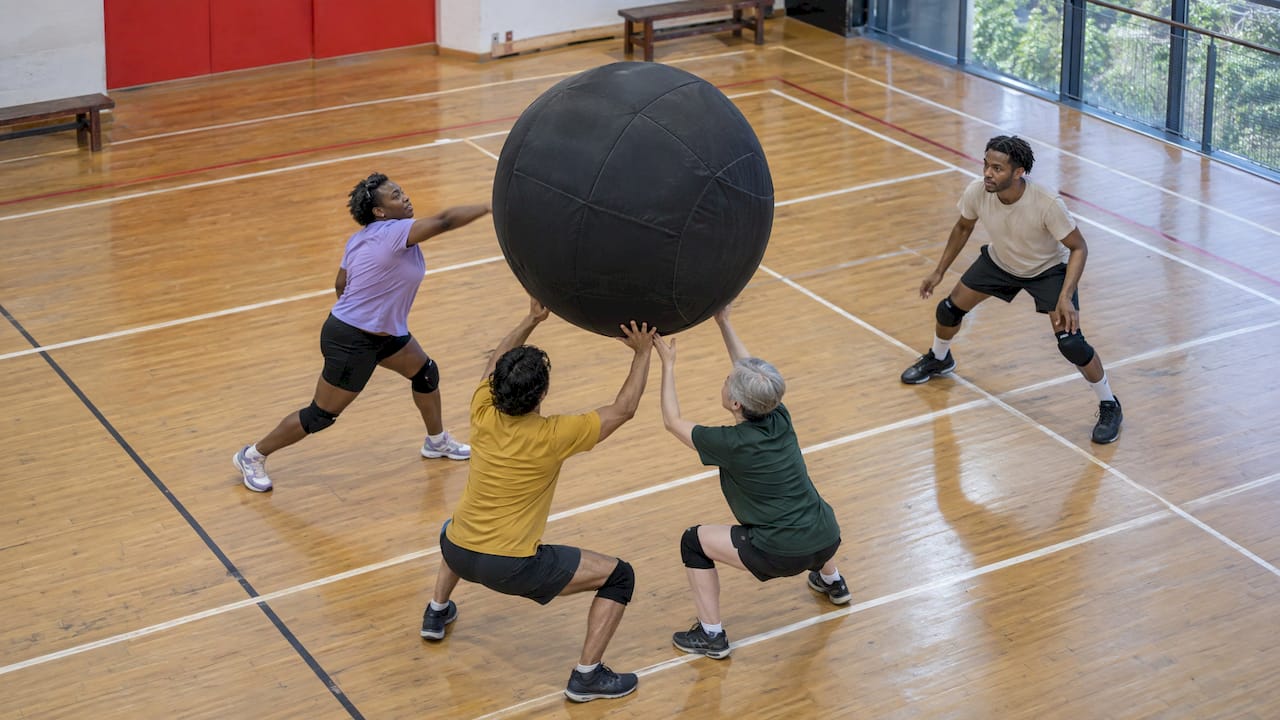
For teams that need a lift and a laugh, high-energy formats work well. Our budget-friendly programs include Combat Skirmish Laser Tag at $37 to $45 per person, Bloop Bubble Soccer at $36 to $43, Kinball at $35 to $45, the Bicycle Scavenger Hunt at $45 to $55 and the App-based Amazing Race at $40 to $55. These suit large groups because everyone plays at once, and they give quieter colleagues and senior leaders the same footing. If you want to see how one of them runs, read about corporate bubble soccer in Singapore.
Problem-solving and collaboration
When the goal is stronger collaboration across departments, look at challenge-based formats. In our quality tier, the Running Man Challenge is $72 to $82 per person, Amazing Race is $65 to $78, Garden Odyssey is $68 to $90 and Laser Clay Shooting is from $69. Each is built around teams solving tasks together under light pressure. See our quality team building programs for details, or the complete guide to Amazing Race team building.
Understanding how colleagues work
Motivation often drops because people misread each other. The Modified DISC Workshop ($70 to $82 per person) and DISC Personality Profiling ($150 to $159 per person) give teams a shared language for working styles. The Office Dynamics Workshop ($80 to $90) looks at how teams interact day to day. Read more on how DISC profiling helps team dynamics.
Recognition and premium experiences
For leadership offsites, regional meetings or a reward for a strong year, our premium programs include Corporate Sailing Team Building at $125 per person, the Katong/Joo Chiat Cultural Food Immersion at $82 to $98 and Office Shark Tank from $92. They fit visiting teams too, since Singapore’s food and harbor setting gives regional guests an experience that feels local.
Giving back together
Shared purpose is a strong motivator, and our CSR programs combine bonding with community contribution. They suit companies based in Singapore and teams visiting for regional meetings.
Wellness and sports
If your concern is energy and burnout, pair the above with wellness-led formats, such as corporate wellness team building or a corporate sports day.
Choosing a format: a quick decision guide
| Your situation | Suggested format | Published price per person |
|---|---|---|
| Large group, tight budget, need quick energy | Laser tag, Kinball, bubble soccer | $35 to $45 |
| Cross-department collaboration | Amazing Race, Running Man Challenge | $65 to $82 |
| Communication and working styles | Modified DISC Workshop | $70 to $82 |
| Leadership team or regional meeting | Sailing, Cultural Food Immersion, Office Shark Tank | $82 to $125, Shark Tank from $92 |
| Deep personality profiling | DISC Personality Profiling | $150 to $159 |
For groups that want rentals only, such as laser tag guns ($25 to $33 per hour per gun), bubble suits ($28 per hour per ball) or portable tentage ($95 per day per tent), see our event rentals. For a team building day where you want the format designed around your goals, a facilitated program is the stronger choice.
Measure whether it worked
Motivation fluctuates over time, and the CIPD’s evidence review on work motivation notes that monitoring progress toward a goal motivates people more than merely setting it. The same applies to your motivation efforts. Measure them.
A useful baseline is the Singapore benchmark. Culture Amp’s July 2026 report, covering July 2025 to June 2026, found 68% of Singapore employees engaged, with a median eNPS (employee Net Promoter Score, a single question on whether people would recommend the company as a place to work) of 0. Treat it as a reference point for your own survey results, not a target. Engagement benchmarks are updated regularly, so use the live report.
The Singapore Institute of Directors report warns that measurement without action fosters cynicism, while action without measurement loses focus. A workable cycle looks like this:
- Run a short pulse survey before the activity or program.
- Run the activity with a clear objective.
- Hold a debrief in which the team names one or two changes to try.
- Re-survey after six to eight weeks and share the results.
For a fuller method, see our practical guide to employee engagement measurement.
Common mistakes
- One big event and nothing else. A single offsite cannot replace weekly feedback. Use it as a reset point inside a rhythm.
- Rewards that feel arbitrary. Tangible rewards without clear criteria can undermine intrinsic motivation, as self-determination research warns.
- Mandatory fun with no choice. Offer formats that suit different energy levels and abilities so everyone can take part.
- No follow-up. Ask the team what to keep and what to change, and act on it.
Our perspective
We plan team building for a living, and our view is simple: motivation grows when people feel capable, connected and fairly treated, and a good shared experience can give them all three in one afternoon.
That is why we do not treat team building as passive entertainment. Our programs are designed around experiential learning and skill transfer, so that what a team practices on the day carries back to the office. We customize each program to your objectives, and we scale it to your group size and budget, from a lively laser tag session to a premium offsite.
Our approach is built on experienced facilitators and on outcomes you can measure in engagement, collaboration and communication. We were named one of Asia’s Top 10 Corporate Team Building Companies in 2023, and we take that as a standard to keep meeting.
Start with the question “what should be different in this team afterward?” and we will build the day around the answer.
Joshua
Plan your motivation program with us
We design and run team building events, workshops, retreats and CSR programs for companies in Singapore and for teams visiting for regional meetings. Programs are tailored to your goals and group size, and they are priced per person or per event.
Browse our budget-friendly, quality and premium programs or go straight to the offer pages on our site to tell us what you want your team to feel and do differently. We will propose a format that fits.
FAQ
How do you motivate employees to improve productivity?
Start with clear goals set together with each person, regular feedback and visible progress. Gallup links a stronger connection to purpose with a 15% improvement in productivity in its 2024 data. Add shared team experiences to strengthen trust and collaboration.
What activities motivate employees at work?
The ones tied to a purpose. Collaborative challenges such as an Amazing Race, workshops that build understanding of working styles, wellness sessions and CSR days all work when they include a debrief and a follow-up. Regular, smaller rituals add to the effect of a large event.
How often should we run motivation activities?
There is no single rule, but the Singapore case studies point to consistency: weekly small rituals and periodic larger sessions. A common pattern is a quarterly or half-yearly team day, with weekly one-on-ones in between.
What are the 5 P’s of motivation?
There is no single official list. A practical version for managers covers purpose, progress, people, praise and pay. It maps closely onto the four drives in Harvard’s model: rewards, belonging, meaningful work and fairness.
Sources
- Systematic Literature Review: The Importance of Work Motivation (Jurnal Pamator, 2023)
- Employee motivation: a powerful new model (PubMed, 2008)
- Self-determination theory and work motivation (2005)
- How to Motivate Employees: 12 Science-Backed Strategies (Science of People)
- How Managers Impact Team Productivity (Gallup)
- Why employee motivation starts with listening (McKinsey, 2024)
- Powering Singapore’s Future (Singapore Institute of Directors)
- Innovate and Learn: Build a Resilient and Skilled STEM Workforce (IHRP)
- A Systematic Ground-Up Approach to Improve Staff Engagement (CHI)
- Transforming Global HR at Ocean Network Express (ManageHR Magazine APAC)
- Work motivation: an evidence review (CIPD)
- Singapore July 2026 (Culture Amp)
Recommended
- Workplace Gamification: Examples, Elements and How to Start
- Outdoor Team Building: Boost Morale & Collaboration
- Employee Engagement & Team Bonding Guide
- How to Improve Workplace Culture: A Practical Plan for Singapore Teams