
You prevent employee burnout by fixing the conditions that cause it: unmanageable workload, low control over how work is done, unclear roles and no clear line between work and personal time. Then you train managers to spot early signs, measure how your people are doing, and give teams regular, well-designed time to recover and reconnect. This guide covers each step for Singapore workplaces, using official local guidance, and shows where team activities fit in.
TL;DR
- Burnout comes from chronic workplace stress that has not been managed well. Rest alone does not clear it, so prevention starts with job design, not perks.
- The main drivers are high job demands, unclear roles and low control. Early signs include irritability, withdrawal, absenteeism, and a drop in performance.
- Singapore’s Tripartite Advisory and the free iWorkHealth tool give you a ready framework to assess risk and track progress.
- Train managers to run supportive check-ins, set after-hours rules and consider flexible work requests fairly.
- Well-run team experiences give people recovery time and stronger relationships. We design them around your goals and budget.
Table of Contents
- What burnout is, and how it differs from ordinary stress
- How common it is in Singapore
- Causes to look for first
- Early warning signs managers should recognise
- Six ways to prevent burnout in your organisation
- Make the physical workspace part of the plan
- Where team activities fit
- Measure whether it is working
- Singapore resources worth knowing
- Our perspective
- Plan a program that fits your team
- FAQ
- Sources
What burnout is, and how it differs from ordinary stress
Burnout is not a bad week. The World Health Organization classifies it as an occupational phenomenon with three dimensions: exhaustion, growing mental distance or cynicism toward the job, and reduced professional efficacy.
The American Psychological Association draws the line with everyday stress. Stress involves daily irritations that rest can usually resolve. Burnout results from chronic stress that has not been managed effectively, and it exceeds what normal breaks and time off can restore.
That difference shapes your whole approach. If the cause is structural, a long weekend will not fix it. Your people will return to the same workload, the same unclear priorities and the same inbox. Prevention means changing what they come back to.
The US CDC’s NIOSH also separates burnout from fatigue, which is transient. One signal leaders can watch for is typically committed, caring workers losing their passion or showing irritability over minor requests. A person who used to volunteer for everything and now answers in single words is telling you something.
How common it is in Singapore
The local picture is worth knowing before you build a case for budget. In a written parliamentary answer published on 22 September 2025, the Ministry of Manpower reported that about one in three employees reported work-related stress or burnout. This was based on aggregated 2024 data from more than 15,000 employees who used the iWorkHealth assessment.
The same answer notes that as of 2023, more than 90% of surveyed firms in Singapore had put in place at least one mental well-being measure. So the question for most employers is no longer whether to act. It is whether what you have in place targets the real causes.
Causes to look for first
Burnout rarely has one cause. Official guidance points to the same cluster of workplace conditions.
WorkSafe Victoria’s guidance on psychosocial hazards lists high job demands, low role clarity and low job control among the causes. Singapore’s Tripartite Advisory on Mental Health and Well-being at Workplaces frames work stressors in two groups: work content and work context.
| Stressor group | What it covers | Questions to ask your team |
|---|---|---|
| Work content | Job scope, workload, pace | Is anyone carrying work that two people should share? Are deadlines realistic? |
| Work context | Culture, relationships, home-work interface | Do people feel safe saying they are stretched? Are messages expected late at night? |
| Role design | Clarity and control | Does everyone know what “done” looks like and have a say in how to get there? |
The advisory also notes that a negative working environment can lead to physical and mental health challenges. That is why it treats mental well-being as a workplace health matter rather than a private one.
Early warning signs managers should recognise
Burnout is easier to stop in its early stages. A 2024 paper in PMC on the temporal stages of burnout found that early intervention is critical, especially when workers are still engaged but have started to feel a gap between their ideals for the job and the reality.
WorkSafe Victoria lists the following signs managers should watch for:
- Changes in performance or concentration
- Irritability or mood swings
- Absenteeism
- Withdrawal or disengagement
- Headaches and persistent tiredness
None of these proves burnout on its own. Together, and over weeks, they are a reason for a private, supportive conversation, not a performance warning. Managers are not clinicians. Their job is to notice, ask, adjust workload where they can and point people to help.
Six ways to prevent burnout in your organisation
1. Treat well-being as a workplace health risk
The Tripartite Advisory recommends that employers review mental well-being regularly as part of workplace health risk assessment, using methods such as surveys and focus groups. Put it on the same agenda as other risks, with an owner and a review date.
2. Fix workload at the source
Sit with each team lead and map who is carrying what. Cut recurring meetings that no longer earn their slot. Where a team is consistently over capacity, the answer is hiring, reprioritising or dropping work, not a resilience workshop. Regular check-ins to prioritise and adjust workloads are a core part of the advisory’s guidance for managers.
3. Set clear after-hours rules
The advisory suggests clear communication policies that do not require replies until the next working day. In practice this means leaders model it: schedule late messages for morning, and say out loud that a reply can wait.
4. Handle flexible work requests fairly
The advisory encourages employers to consider flexible work arrangement requests fairly, balancing employee needs against business operations. A fair process, with reasons given either way, builds trust even when the answer is no.
5. Build psychological safety
People will not tell you they are struggling if they expect to be judged. The advisory points to an open culture where mental health can be discussed without fear, and to peer support systems and employee assistance programs. Supervisors should respond to disclosures with sensitivity and confidentiality. Kaiser Permanente’s guidance makes the same point: psychological safety lets managers step in before symptoms escalate.
6. Train your managers
The advisory recommends training managers and supervisors to spot signs of mental distress and refer employees for help. A one-hour briefing on what to notice, what to say and who to refer to will do more than most wellness posters.
Make the physical workspace part of the plan
The environment people sit in all day matters too. Small, visible care for the office, such as greenery and well-kept shared areas, signals that the workplace is meant to be lived in. If you are considering plants, an overview of office plant maintenance in Singapore explains what upkeep involves so the greenery stays healthy rather than becoming one more neglected corner.
Where team activities fit
Structural fixes come first, and they work best alongside regular time for people to connect and recover. Team experiences help in three ways: they break the daily routine, they rebuild the relationships that make it easier to ask for help, and they give managers a view of how the team really works together.
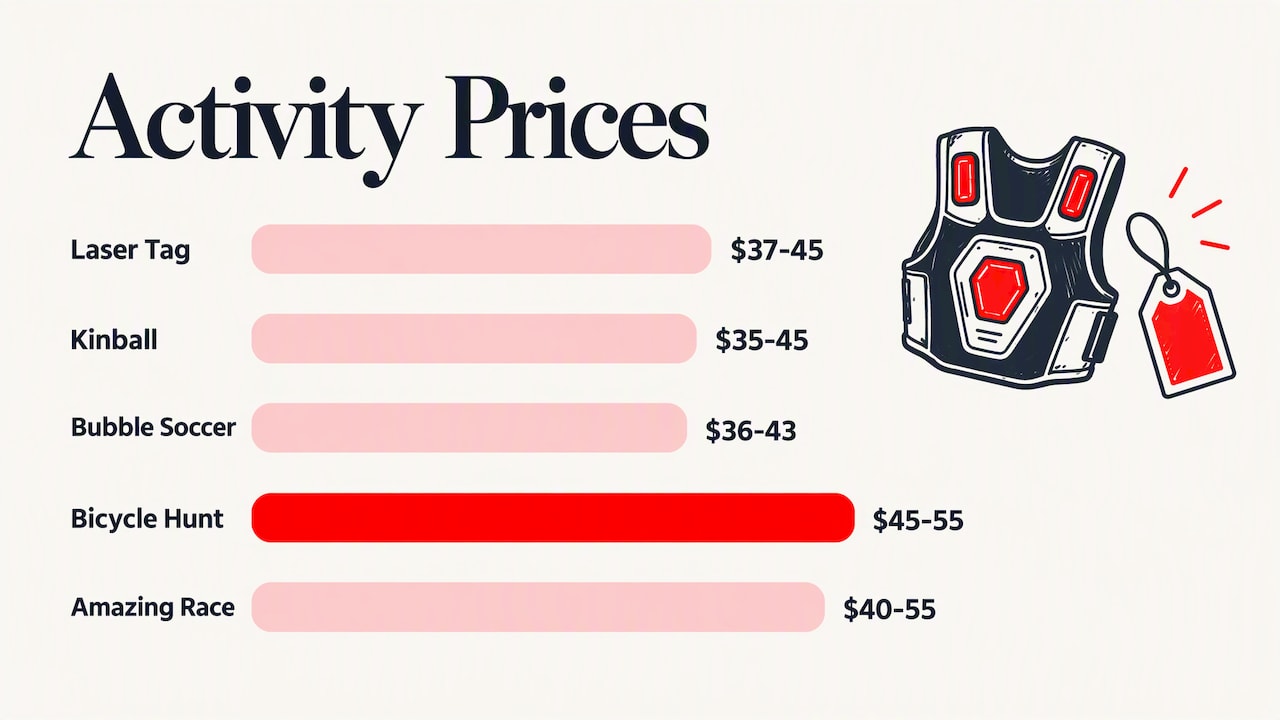
The key is choosing the right format for the goal. Here is how we match formats to needs, with our published per-person prices.
| Goal | Format that fits | Published price |
|---|---|---|
| Release tension, laugh together | Combat Skirmish Laser Tag, Kinball, Bloop Bubble Soccer | Laser Tag $37-45; Kinball $35-45; Bubble Soccer $36-43 per person |
| Get out of the office and move | Bicycle Scavenger Hunt, App-based Amazing Race | $45-55 and $40-55 per person |
| Understand working styles and reduce friction | Modified DISC Workshop, Office Dynamics Workshop | $70-82 and $80-90 per person |
| Slow down and reflect with a calm setting | Garden Odyssey, Katong/Joo Chiat Cultural Food Immersion | $68-90 and $82-98 per person |
| Executive or senior team reset | Corporate Sailing Team Building, DISC Personality Profiling | $125 and $150-159 per person |
All prices are as published on our site at the time of writing, and final quotes depend on group size and customisation. You can browse the budget-friendly activities, the quality programs and the premium programs to compare.
Active formats for releasing pressure
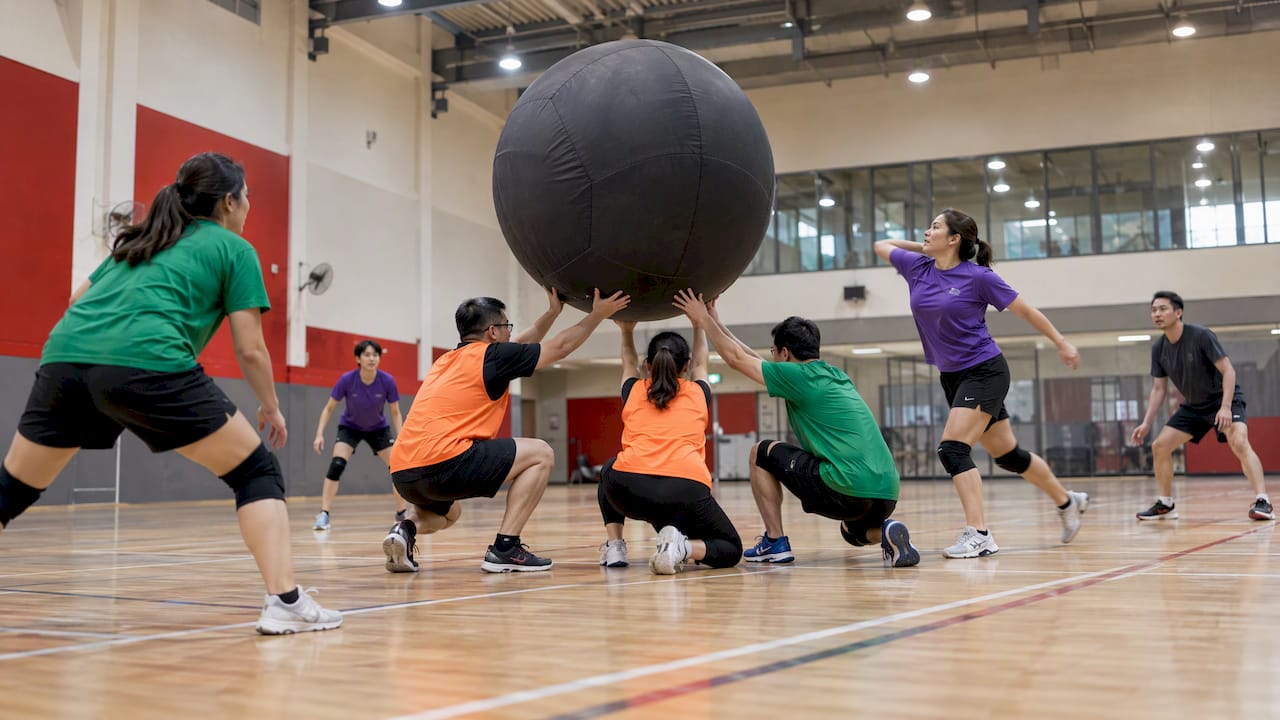
High-energy games work because they take people out of their roles for a couple of hours. Nobody is defending a deadline while dodging a bubble ball. Cross-department teams mix naturally, and juniors and managers end up on equal footing. For a lower-cost option for a large group, laser tag and Kinball are our most scalable choices.
Workshops for communication and understanding
A lot of workplace strain comes from misread intentions: the colleague who seems curt, the manager who seems to micromanage. Personality-profiling workshops give teams a shared language for how they prefer to work. Our Modified DISC Workshop is designed to turn those insights into agreed ways of working, so the learning does not stop at the session.
Calm, restorative formats
Not every team needs more adrenaline. After a heavy quarter, a slower format can land better. Our approach to creating space for teams to breathe again is described on our page on focusing on mental health at work, and our corporate wellness team building page covers activities aimed at employee well-being.
Measure whether it is working
Without measurement, prevention becomes guesswork. The Tripartite Advisory points to iWorkHealth, a free online psychosocial assessment tool provided by MOM and the WSH Council with partners. It offers two versions, according to the iWorkHealth overview:
- Full version: 89 questions, 15 to 20 minutes, to identify workplace stressors and assess progress after interventions.
- Lite version: 20 questions, about 5 minutes, for more frequent pulse surveys on work stress and burnout.
Reports are anonymised and aggregated, and you can segment findings by department. That lets you target the team that is struggling instead of rolling out one programme to everyone.
Add simple proxy indicators alongside the survey, such as absenteeism rates, plus focus group discussions, as the advisory suggests. A sensible rhythm is a full assessment before you start, pulse checks every few months, and a full re-run after a year to compare.
When you run a team event, apply the same discipline. Agree the goal beforehand, such as better cross-team communication, then check it in your next pulse survey instead of relying on how much fun everyone had.
Singapore resources worth knowing
- The Tripartite Advisory on Mental Health and Well-being at Workplaces, published by MOM with tripartite partners, is the best single reference for employers. It covers risk assessment, manager training, communication policies and referral.
- iWorkHealth, free for employers, for assessment and tracking.
- The Well-being Champions Network, launched by the WSH Council, shares best practices and offers training resources to help companies strengthen workplace mental well-being.
For current details, eligibility and how to join, go to the official pages directly.
Our perspective
We plan team experiences for a living, so we see what burnout looks like from the inside of a team: the quiet person at the back of the briefing, the manager who has not taken leave in months, the group that goes silent when asked how workload feels.
Our view is simple. Events do not replace good management, but a well-designed event gives good management a place to show up. When a team spends two hours solving a challenge together, you learn who steps up, who holds back and where communication breaks. That information is hard to get in a meeting room.
That is why we do not sell one format. We design programs around the objective, whether that is release, reflection or better communication. We scale them for group size and budget, and we focus on experiential learning and skill transfer rather than passive entertainment. Our facilitators are experienced, and we build in ways to see outcomes in engagement, collaboration and communication.
If your team is stretched, start by telling us what you want people to feel and do differently afterward. We will build backward from there.
Joshua
Plan a program that fits your team
We design and run team building, wellness and CSR programs for companies in Singapore, including regional teams visiting for meetings. Tell us your goal, your headcount and your budget, and we will propose a format that fits. Our corporate team building solutions page shows what we offer, and our corporate wellness programs cover well-being-focused events.
Ready to talk through options? Contact AdvenTOUR and we will come back with a tailored proposal.
FAQ
What is the first thing an employer should do to prevent burnout?
Start by finding out where the pressure is. Use a survey tool such as iWorkHealth, which is free, and speak to team leads about workload. Singapore’s Tripartite Advisory recommends reviewing mental well-being regularly as part of workplace health risk assessment, so you act on evidence instead of assumptions.
How do I tell burnout from normal stress?
Stress usually eases with rest and a change of pace. Burnout is chronic: exhaustion, growing cynicism toward the job and reduced effectiveness that do not lift after time off. If someone who was committed becomes withdrawn or irritable over weeks, have a private, supportive conversation and point them to your employee assistance resources.
Can team building help reduce employee burnout?
Yes, when it is paired with fixes to workload and boundaries. A well-designed session gives people a break from routine, builds trust across the team and helps managers see how people work together. We choose formats by goal, from active games to calm, reflective programs.
How much does a team activity cost in Singapore?
Our published prices run from about $35 per person for lighter, budget-friendly formats such as Kinball, up to $125 to $159 per person for premium programs such as corporate sailing and DISC personality profiling. Final cost depends on group size and how much you customise, so request a quote.
How often should we check on burnout risk?
A full assessment once a year plus short pulse checks every few months is a practical rhythm. iWorkHealth’s Lite version takes about five minutes and is designed for frequent pulse surveys, while the Full version suits baseline and follow-up comparisons.
Sources
- Employers need to focus on workplace burnout (APA)
- Burnout (PSNet, AHRQ)
- Module 2: What burnout is and is not (NIOSH, CDC)
- Compliance code: Psychological health, Part 2 (WorkSafe Victoria)
- Tripartite Advisory on Mental Health and Well-being at Workplaces (MOM)
- Written answer to PQ on workplace burnout, 22 September 2025 (MOM)
- iWorkHealth overview (WSH Council)
- Temporal Stages of Burnout: How to Design Prevention? (PMC)
- Recognize and address the early signs of employee burnout (Kaiser Permanente)
- Office plant maintenance in Singapore
Recommended
- Corporate Wellness Programs in Singapore
- Employee Engagement Measurement: A Practical Guide for Singapore Teams
- Celebrate Employee Achievements Events Singapore
- Corporate Wellness Team Building in Singapore