
Ultimate Outdoor Team Building Exercises for Thriving Teams
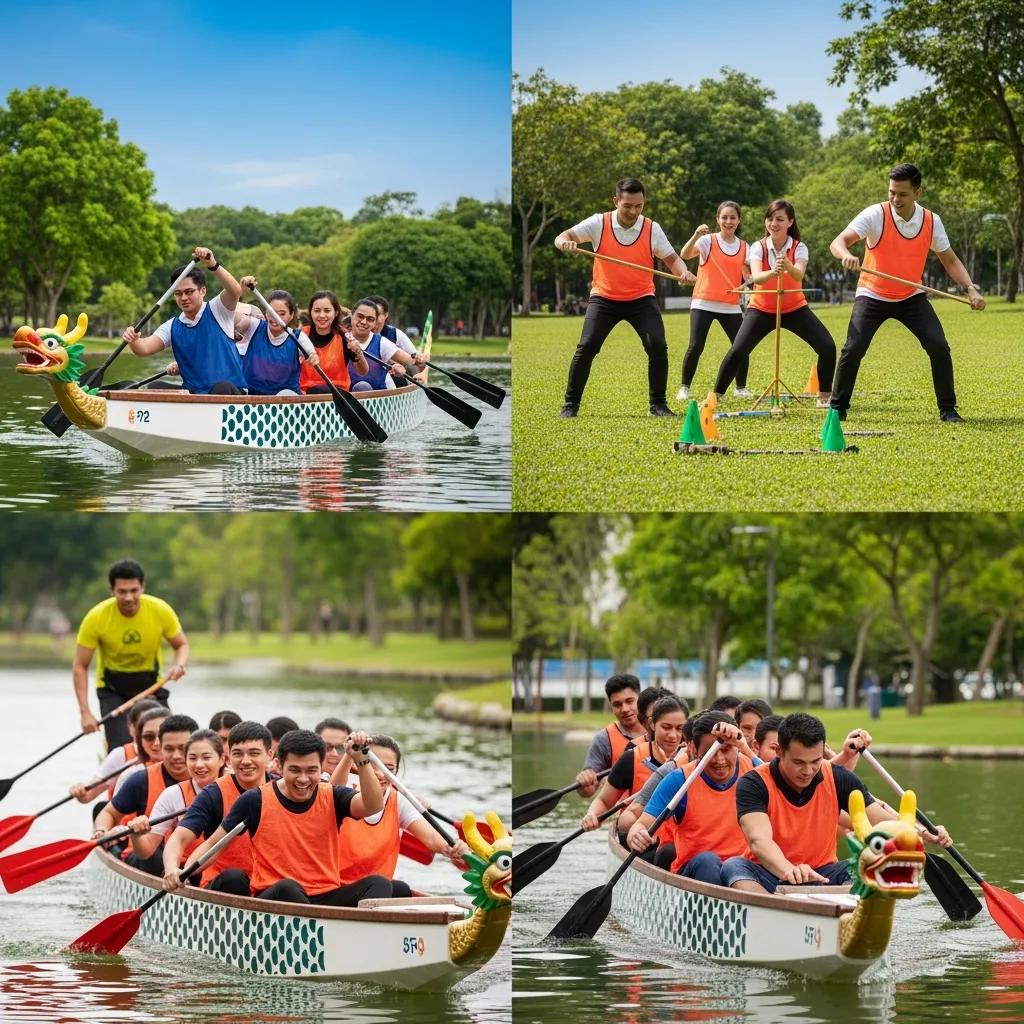
Ultimate Outdoor Team Building Exercises for Thriving Teams in Singapore
Outdoor team building exercises are structured, experiential activities that place employees in shared physical and problem-solving scenarios to boost teamwork, communication, leadership and morale. These programs use real-world constraints and group goals so teams practise collaboration under low-risk pressure, turning play into measurable workplace skills. This article explains why outdoor team building activities in Singapore drive business outcomes, presents top adventure team building Singapore examples, outlines a simple customization process you can follow, and shows how to measure impact. Readers will get practical exercise ideas, venue and logistics considerations tailored to local constraints, and clear steps to engage a provider for outcomes-driven events. Throughout we use current research perspectives and practical implementation tips so HR and people leaders can plan effective corporate team building Singapore programs with confidence.
Why Are Outdoor Team Building Games Essential for Corporate Teams?
Outdoor team building games are essential because they convert abstract skills like communication and trust into observable behaviours through shared challenges and experiential learning. The mechanism is simple: teams face constraints and must allocate roles, communicate under time pressure, and adapt—this produces repeatable improvements in coordination and psychological safety. Measurable outcomes include faster decision cycles, clearer role clarity, and higher reported engagement after brief interventions. Employers can align these outcomes to KPIs such as collaboration scores in engagement surveys and observable cross-team project metrics.
Outdoor team building delivers three core benefits through direct mechanisms:
- Improved Communication: Shared tasks force explicit information exchange.
- Stronger Collaboration: Role-based challenges create interdependence and trust.
- Leadership Development: Rotating responsibilities reveal situational leaders.
These benefits transfer when structured debriefs connect activity moments to everyday workflows, which leads to clearer behaviour changes in the office.
How Do Outdoor Activities Boost Teamwork and Communication?
Outdoor activities boost teamwork and communication by creating constrained environments where information gaps and interdependence are visible and urgent. Teams practise concise briefing, active listening, and feedback loops while attempting a physical objective, which reinforces communication routines that translate back to work. For example, a timed problem-solving challenge requires role assignment and status updates; those practices map directly to stand-ups and handoffs. Facilitators who prompt reflection during debriefs help teams convert event behaviours into repeatable team norms and improved meeting efficiency.
What Leadership and Problem-Solving Skills Develop Through Outdoor Challenges?
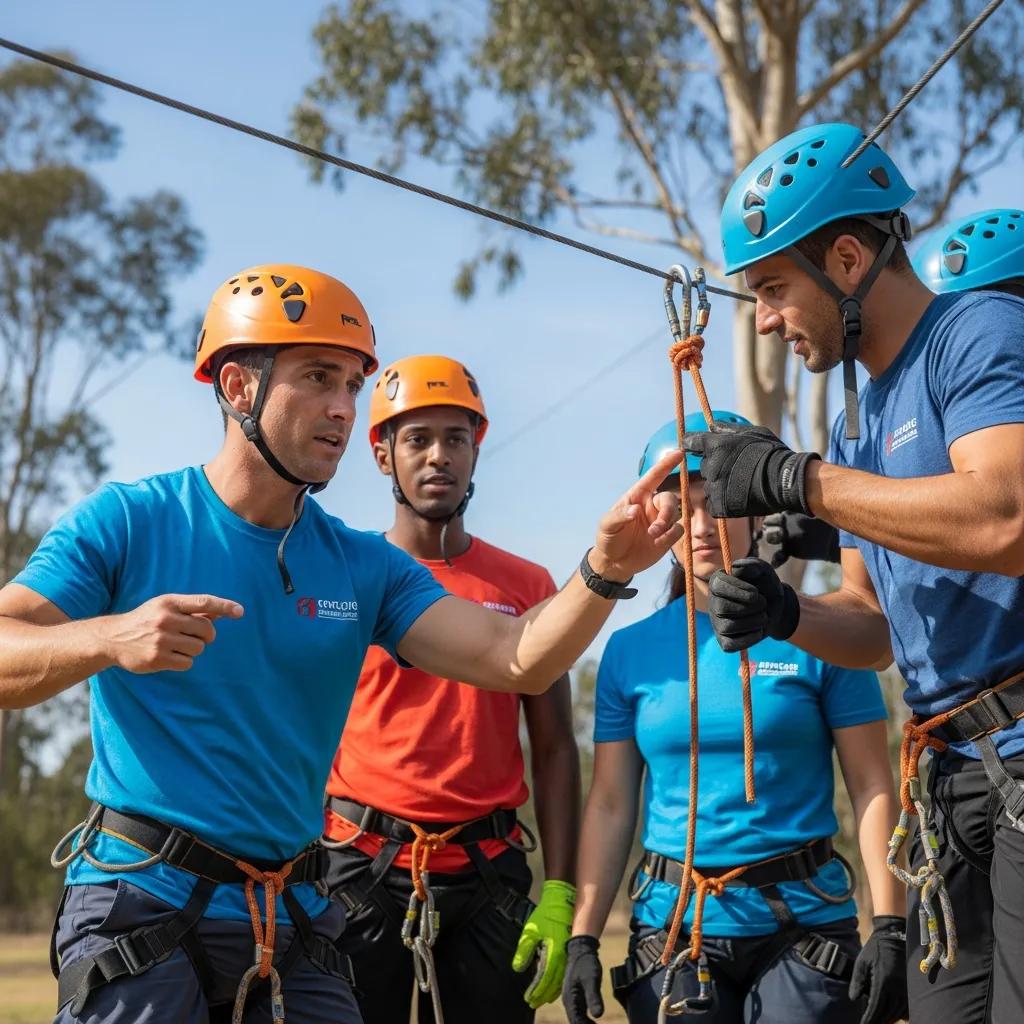
Outdoor challenges develop leadership skills like rapid decision-making, delegation, and situational awareness because leaders must organise resources and act under evolving constraints. Problem-solving improves as teams learn to reframe obstacles, use limited resources creatively, and test quick prototypes in the field. Activities that rotate leadership roles accelerate capability distribution across the team, ensuring more individuals can step up when projects require cross-functional coordination. These skill gains are trackable via pre/post activity surveys and behavioural observation during subsequent projects.
What Are the Best Adventure Team Building Exercises in Singapore?
Adventure team building Singapore focuses on high-engagement, active formats that combine physical challenge with strategic thinking to deliver strong bonding and learning outcomes. Adventure activities are especially effective for teams needing morale boosts, trust building, and energy renewal through shared achievement. Below are curated exercise types, each chosen for clear learning objectives and suitability for common group sizes in Singapore corporate settings.
The following list highlights top choices and one-line benefits:
- Amazing Race: Urban navigation and puzzle-solving for cross-functional collaboration.
- Dragon Boat Challenge: Synchronised teamwork and leadership under physical load.
- Team Olympics: Mixed-skill relays that emphasise role clarity and healthy competition.
- Squid Game–style Challenges: Controlled risk scenarios that reveal decision-making under pressure.
These adventure formats can be scaled for groups from small teams to whole departments and adapted for different physical intensity levels to suit accessibility needs.
Introductory comparison of adventure activities, their learning focus and suitability:
| Activity | Key Learning Objective | Typical Group Size / Intensity |
|---|---|---|
| Amazing Race | Navigation, delegation, cross-team problem-solving | 20–100 / Low-Medium |
| Dragon Boat Challenge | Coordination, leadership, endurance | 10–40 / Medium-High |
| Team Olympics | Role clarity, healthy competition, morale | 10–200 / Low-Medium |
| Squid Game-style Challenges | Decision-making under pressure, risk assessment | 8–80 / Medium |
This table helps planners pick activities that match objectives and group constraints; choices should then be refined with logistical planning and safety checks.
Which Adventure-Based Outdoor Games Foster Team Bonding?
Bonding arises when teams experience shared achievement, mild physical challenge, and moments of humour or vulnerability, which many adventure activities deliberately create. Games like Dragon Boat Challenge and Team Olympics foster synchrony and mutual reliance, making intangible trust visible through coordinated action. Urban formats such as Amazing Race introduce collaborative problem-solving with social elements that accelerate peer recognition. Selecting lower-risk variations and inclusive roles ensures bonding benefits are accessible to all participants regardless of fitness levels.
How Do These Activities Improve Collaboration and Morale?
Improved collaboration and morale follow from repeated small wins and clearer interpersonal knowledge gained during activities, which increase mutual predictability and willingness to cooperate. Post-event measurement—short engagement surveys and manager observations—can capture shifts in team sentiment and cross-team referrals. Over time, improved morale links to reduced friction in projects and better retention indicators; event designers should recommend pre/post metrics to quantify ROI. Simple measures like net promoter scores for team events and action plans from debriefs make the business case visible.
How Can You Customize Outdoor Team Building Programs for Your Team?

Customizing outdoor team building programs begins with aligning the event design to explicit organisational goals, participant constraints, and budget. The process ensures each activity maps to desired outcomes—such as communication improvement or leadership identification—while accounting for logistics and accessibility. A clear customization framework creates better ROI because it targets mechanisms that produce measurable behaviour change rather than generic fun. Below is a concise how-to process you can apply before selecting specific activities.
Follow these practical steps to customise a program:
- Assess goals and constraints: define business outcomes, physical limits and budget.
- Choose activities that map to those outcomes and suit group size.
- Plan debriefs and measurement to capture behaviour change and follow-up actions.
These steps create a tight line from objective to activity to measurement, increasing the likelihood that learning transfers to work.
Introductory matrix showing common customization levers and their benefits:
| Customization Option | What it Changes (Attribute) | Benefit / ROI |
|---|---|---|
| Duration & pacing | Engagement depth and fatigue levels | Longer sessions allow deeper learning and reflection |
| Facilitation depth | Level of guided reflection and action planning | Stronger behaviour transfer and measurable outcomes |
| CSR integration | Inclusion of community tasks | Enhanced purpose alignment and employer brand value |
Customising these attributes helps teams focus on outcomes and permits transparent budgeting for measurable impact.
What Venue Options Are Ideal for Corporate Outdoor Activities in Singapore?
Ideal venue choices in Singapore balance accessibility, activity needs, and permit requirements to ensure smooth execution. Urban parks, waterfronts and designated activity centres each suit different activities: waterfronts for dragon boating, large parks for team Olympics, and city routes for Amazing Race formats. Logistics include transport planning, safety briefings, permit checks and weather contingencies; these factors determine participant experience and risk management. Choosing venues with nearby facilities and contingency indoor options reduces day-of-event disruption and supports inclusive participation.
Which Customization Features Enhance Engagement and ROI?
Customization features that most directly enhance engagement and ROI include tailored learning objectives, structured debriefs with action plans, and measurable KPIs tied to business goals. Features such as rotating leadership roles and skill-focused modules increase observable behaviour change, while transparent pricing frameworks help stakeholders approve budgets. Below is a numbered, step-style checklist to implement customization effectively.
- Define measurable objectives linked to business KPIs.
- Select activity formats that map to those objectives.
- Embed structured debriefs and follow-up actions to ensure behaviour transfer.
Applying these steps makes the event a strategic intervention rather than a one-off morale booster.
What Makes Adventour Singapore the Expert in Outdoor Team Building?
Adventour Singapore positions itself as a specialist for corporate team building events and workshops in Singapore, offering quality and premium programs designed to balance fun with strategic learning. The company provides curated activities such as Squid Game, Running Man Challenge, Laser Clay Shooting, Amazing Race, Team Olympics and Dragon Boat Challenge, and emphasises expert planners and transparent pricing. Adventour’s approach focuses on enhancing collaboration, leadership and problem-solving through thoughtfully designed experiential learning, with example pricing ranges made clear to help planning decisions. For organisations ready to convert team-building into measurable outcomes, contacting Adventour Singapore to engage its planners is the recommended next step.
How Adventour’s experience and services translate to client benefits:
- Expert planners scope objectives and design bespoke activities for measurable learning.
- Thoughtful curation ensures balance between fun and strategic outcomes for teams.
- Transparent pricing (example range: SGD 50–82 per person) helps align budgets to program depth.
How Does 20+ Years of Experience Benefit Your Team Building Event?
Two decades of event experience yields practical advantages in logistics, vendor relationships and refined facilitation design that improve both reliability and learning outcomes. Experienced providers already understand local venue constraints, permit processes and safety requirements, which shortens planning timelines and reduces operational risk. They can also suggest proven activity sequences and debrief formats that directly map to organisational goals, increasing the probability that the event produces measurable improvements in collaboration. Picking a provider with deep local experience therefore increases the likelihood of a smooth, targeted, and impactful team-building outcome.
What Support Do Dedicated Event Planners Provide?
- Event scoping and goals alignment to ensure activities meet business objectives.
- On-site facilitation, safety briefings and logistics management for reliable delivery.
- Post-event debriefs and measurement support to capture learning and plan follow-up actions.

Joshua Tay is the Director of AdvenTOUR Singapore, a corporate team-building company he has successfully led since 2007. With a career spanning back to 1996, Joshua brings three decades of hands-on experience designing and facilitating high-impact team-building programs, Corporate Social Responsibility (CSR) initiatives, and overseas corporate retreats for youth and corporate groups alike.
A former Singapore Armed Forces (SAF) officer, Joshua combines strategic leadership with rigorous safety standards. He is also a certified Instructor Trainer in scuba diving, first aid, and AED. Drawing from this wealth of operational and experiential expertise, Joshua personally writes and reviews all the team-building guides and resources published on this website to ensure they are practical, safe, and effective.
About AdvenTOUR
With over 20 years of experience and a proven track record, AdvenTour specializes in curating unique team building experiences in Singapore that foster teamwork, communication, and collaboration. Whether you're planning a small team bonding session or a large corporate retreat, we tailor every event to your goals and budget.
Quick Links
Informative Blogs
Contact Us
Call or Whatsapp:
(65) 8915 4522
Email:
info@adventour.com.sg