
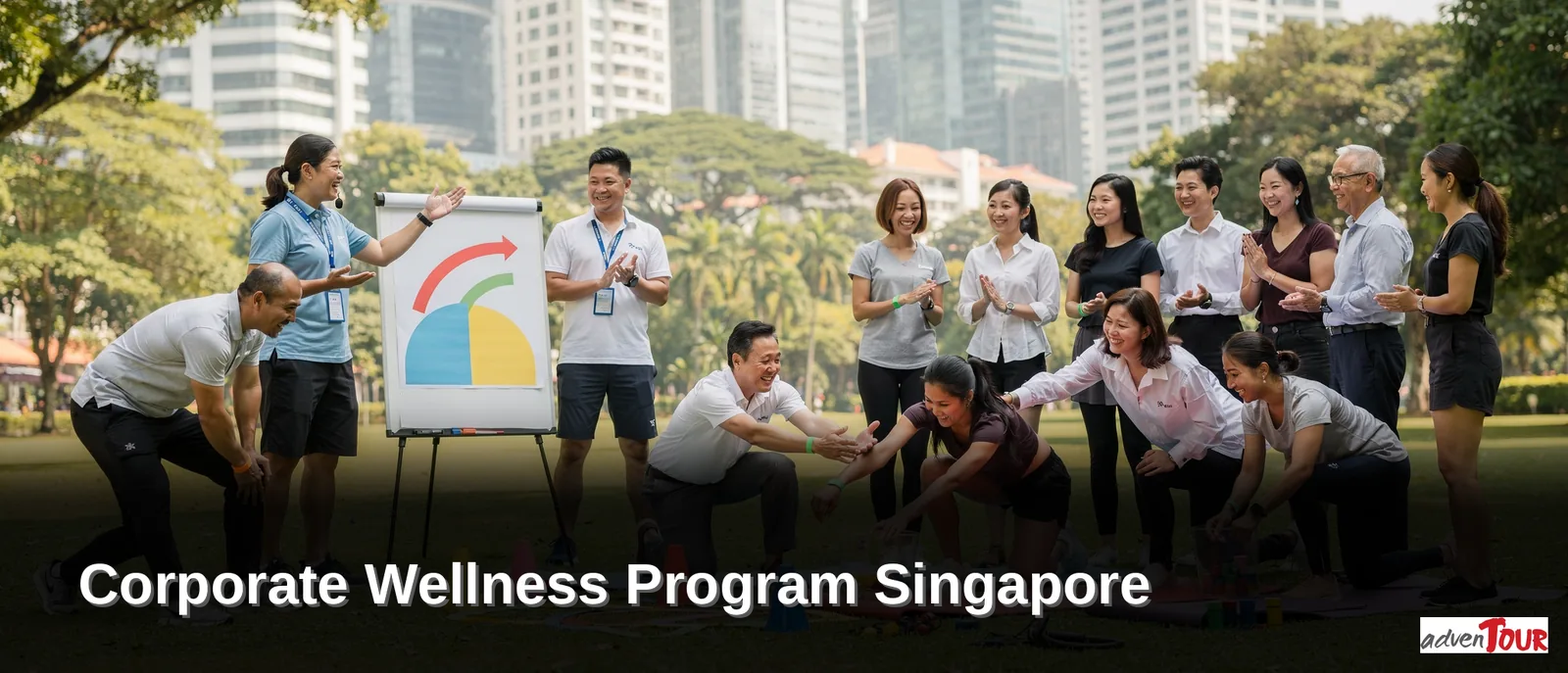
Corporate Wellness Program Singapore: Corporate Wellness Programs
By Adventour Singapore Editorial Team · Updated 2026-08-13
Corporate wellness ROI in Singapore reaches 3-6x invested costs through reduced absenteeism and healthcare claims. Adventour Singapore, a 10-employee team based in Singapore, designs measurable corporate wellness packages Singapore employers can rely on, combining corporate team building Singapore activities with health metrics tracking to deliver quantifiable engagement and productivity gains for corporate clients.
Preventable conditions drive 75% of medical costs. Poor employee well-being costs organizations $322 billion globally in turnover and lost productivity. Singapore companies like Adventour Singapore, a 10-employee firm based in Singapore, SG, can measure wellness ROI by tracking reduced turnover, since
Corporate wellness ROI in Singapore hinges on tracking measurable outcomes: reduced absenteeism, lower claims costs, and improved retention. Gallup research shows 75% of medical costs stem from preventable conditions. Poor well-being drains $322 billion globally through turnover and lost productivity. HR Directors calculating ROI should pair participation data with engagement metrics before scaling programs company-wide.
Measuring the Business Impact of Workplace Wellness
- Johnson & Johnson’s 1979 Live for Life program demonstrated fitness and nutrition initiatives drive measurable workplace wellness adoption.
- Gallup reports 75% of medical costs correlate directly to workplace wellness program effectiveness and employee health outcomes.
- Healthcare cost inflation forces organizations to prove financial ROI for every dollar invested in employee wellness initiatives.
- Wellness programs link to concrete business outcomes including lower claims costs, improved retention, and reduced absenteeism rates.
What Does Wellness Program ROI Really Mean?
Return on investment for a corporate wellness program in Singapore answers one direct financial question: for every dollar an organization spends, what comes back? Singapore HR Directors and Business Executives increasingly demand this answer before renewing budgets. Traditionally, wellness ROI centered on two levers: reducing healthcare costs and cutting absenteeism. That narrow lens still matters, but it no longer tells the full story for companies operating in Singapore’s competitive talent market.
Value on investment, or VOI, has emerged as the companion metric HR leaders now track alongside ROI. VOI captures benefits that resist a clean dollar figure, including stronger employee engagement, a healthier workplace culture, and lower turnover. Executives evaluating employee wellness SG strategies should treat VOI as evidence of impact, not a soft afterthought.
Is ROI the only metric that matters for wellness programs?
No, ROI alone misses much of the value a wellness program creates. Financial savings from lower claims costs matter, but engagement and retention gains often carry equal weight for leadership decisions. A balanced scorecard approach captures both.
Why do HR leaders care about proving wellness ROI?
Wellness initiatives now tie directly to measurable business outcomes rather than serving as a goodwill perk. Programs increasingly link to lower claims costs and improved employee retention, giving finance teams concrete numbers to review. HR Directors who present both ROI and VOI data build a stronger case for continued investment. Adventour Singapore designs wellness-oriented team programs that support this dual measurement approach for corporate clients across the region.
Why Are Singapore Employers Investing In Wellness?
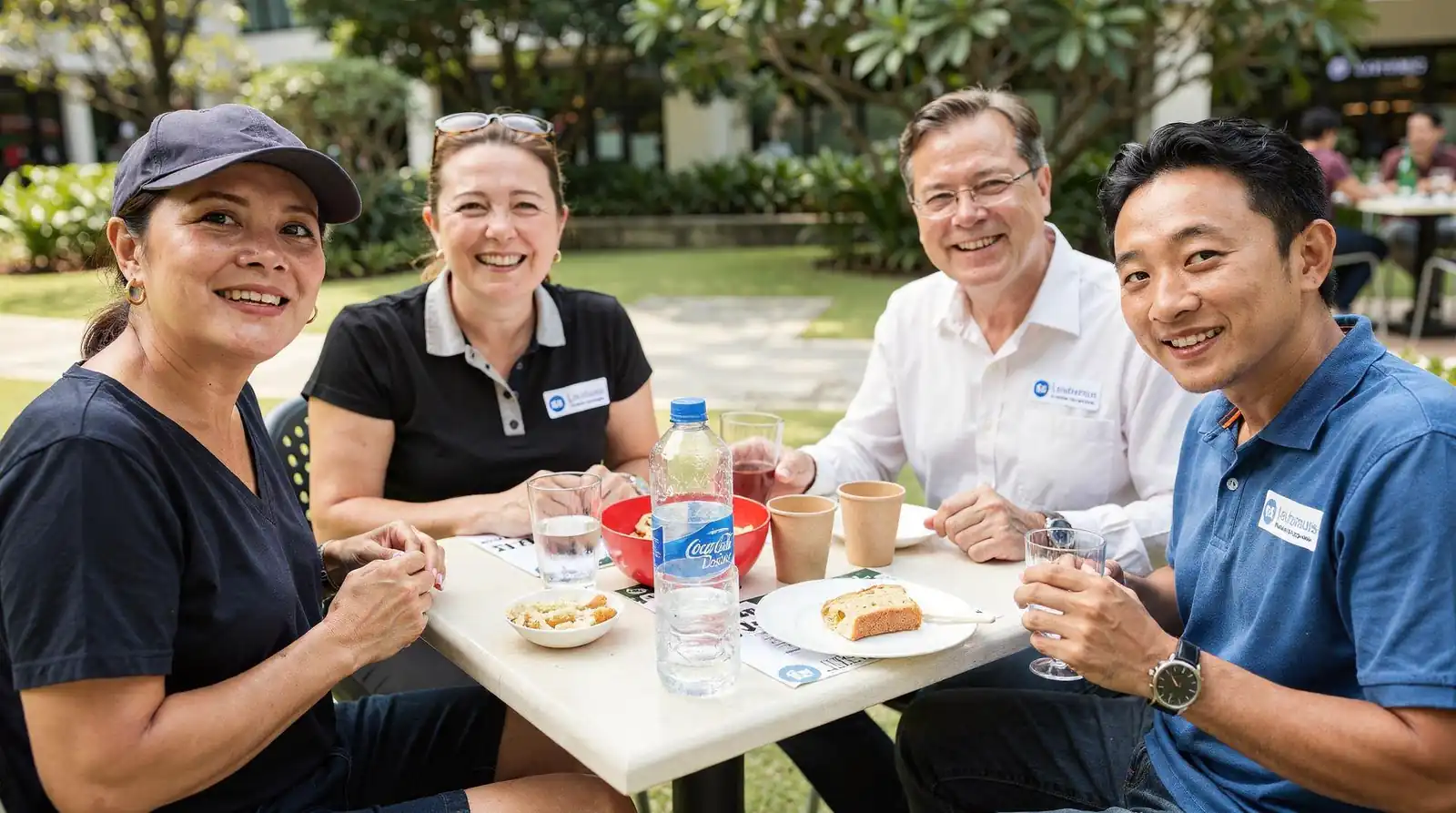
Singapore employers are investing in wellness because unmanaged burnout drains productivity and drives talent away. Globally, poor employee well-being costs organizations $322 billion in turnover and lost productivity. That figure represents wages, rehiring costs, and stalled output that leadership never recovers. For Singapore firms competing for skilled talent, ignoring wellness means absorbing a share of that loss year after year.
Adventour Singapore operates from Singapore and works directly with organizations navigating these local wellness and engagement priorities. Proximity matters. HR teams need a partner who understands Singapore’s workplace culture, not a distant vendor applying a generic template.
What business problem does a wellness program actually solve?
A well-designed corporate wellness program singapore employers can rely on addresses two connected problems: disengagement and disconnection between colleagues. Structured team activities are essential for fostering collaboration, improving communication, and lifting workplace morale. Without that structure, teams default to silos, and silos slow decision-making.
Does employee wellness in Singapore actually improve performance?
Evidence points toward yes. Structured engagement activities strengthen relationships, boost productivity, and build a more positive work environment. These outcomes compound over time rather than appearing overnight.
Executives evaluating employee wellness sg initiatives should look for programs built around three measurable outcomes:
- Stronger relationships between departments and hierarchy levels
- Higher productivity driven by better collaboration and clearer communication
- A healthier work environment that reduces the conditions behind costly turnover
Singapore employers who treat wellness as infrastructure, not a perk, position their organizations to capture retention and productivity gains rather than absorb losses tied to disengagement.
What Do Global Wellness Trends Reveal?
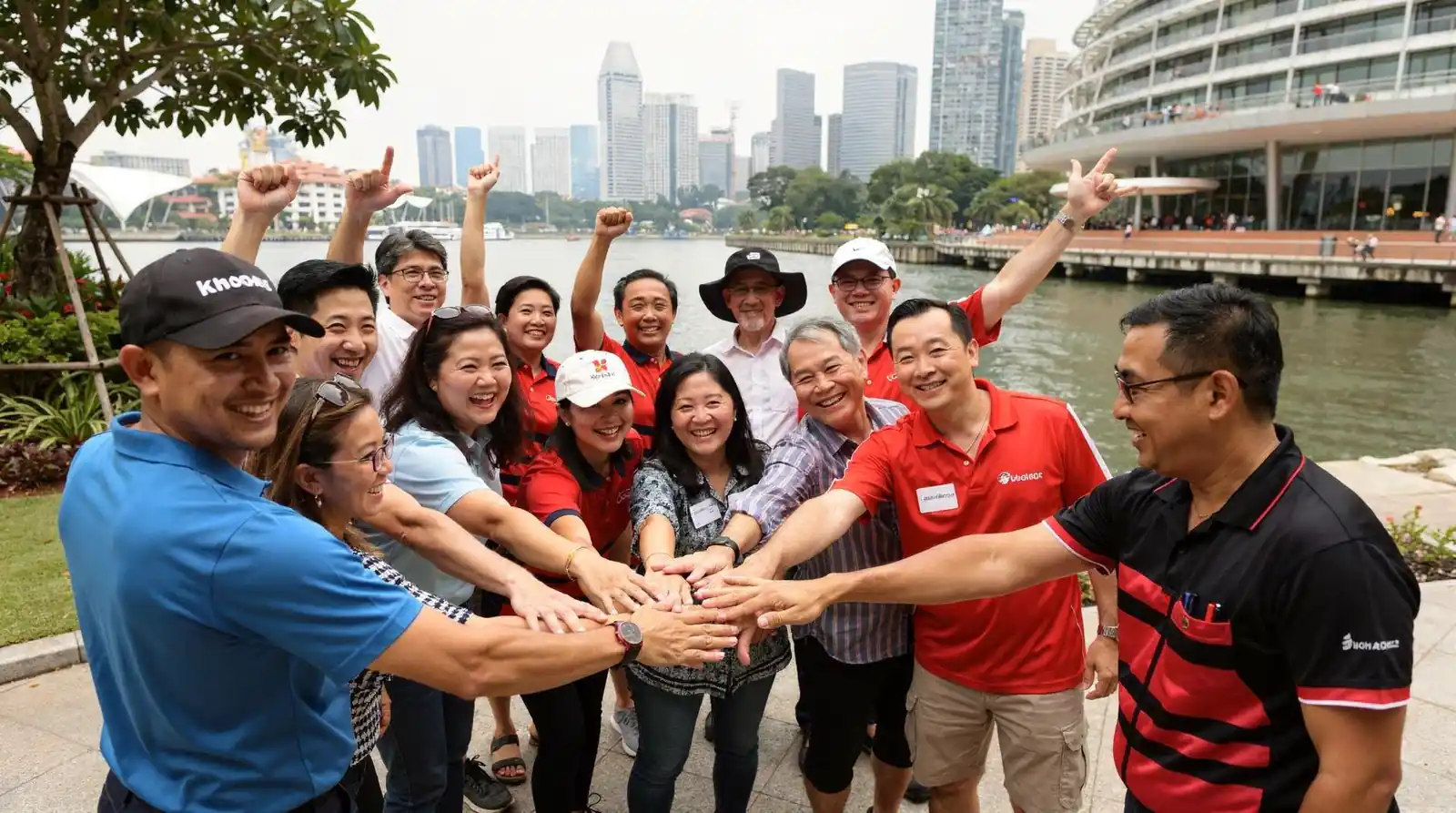
Global research points to a costly gap between wellness spending and workplace results. Preventable conditions account for roughly 75% of medical costs, according to Gallup. A notable share to 20% of involuntary payroll turnover traces back to employee burnout. For HR Directors and People & Culture leaders in Singapore, these figures translate directly into budget line items and retention headaches.
Adoption has grown faster than results, though. About three-quarters of HR professionals report their organizations now run some type of wellness initiative. Yet only a portion sees real payoff: more than two-thirds of those companies rate their programs as “somewhat effective” or “very effective” at reducing healthcare costs. That leaves a meaningful share of employers paying for programs that underdeliver.
Is employee well-being actually improving?
No — global data shows the opposite trend. Research from Johns Hopkins University’s Human Capital Development Lab, conducted with Great Place To Work, found that employee well-being has slid back to pre-pandemic levels. Gains made during flexible-work experiments appear to be eroding.
What does this mean for a corporate wellness program in Singapore?
Design matters more than participation numbers alone. A well-structured corporate wellness program in Singapore should target the preventable-cost. Burnout drivers Gallup identifies, not just offer generic perks. Programs built around measurable outcomes, rather than checkbox benefits, stand a better chance of matching the two-thirds effectiveness benchmark seen elsewhere.
Three patterns stand out for planning employee wellness in SG initiatives:
- Preventable-condition costs demand proactive, not reactive, health support
- Burnout-driven turnover requires structural fixes, not one-off perks
- Effectiveness tracking separates high-performing programs from underused benefits
AdvenTOUR designs corporate programs around these evidence-backed priorities for clients across Singapore.
How Can Team Building Boost Wellness ROI?
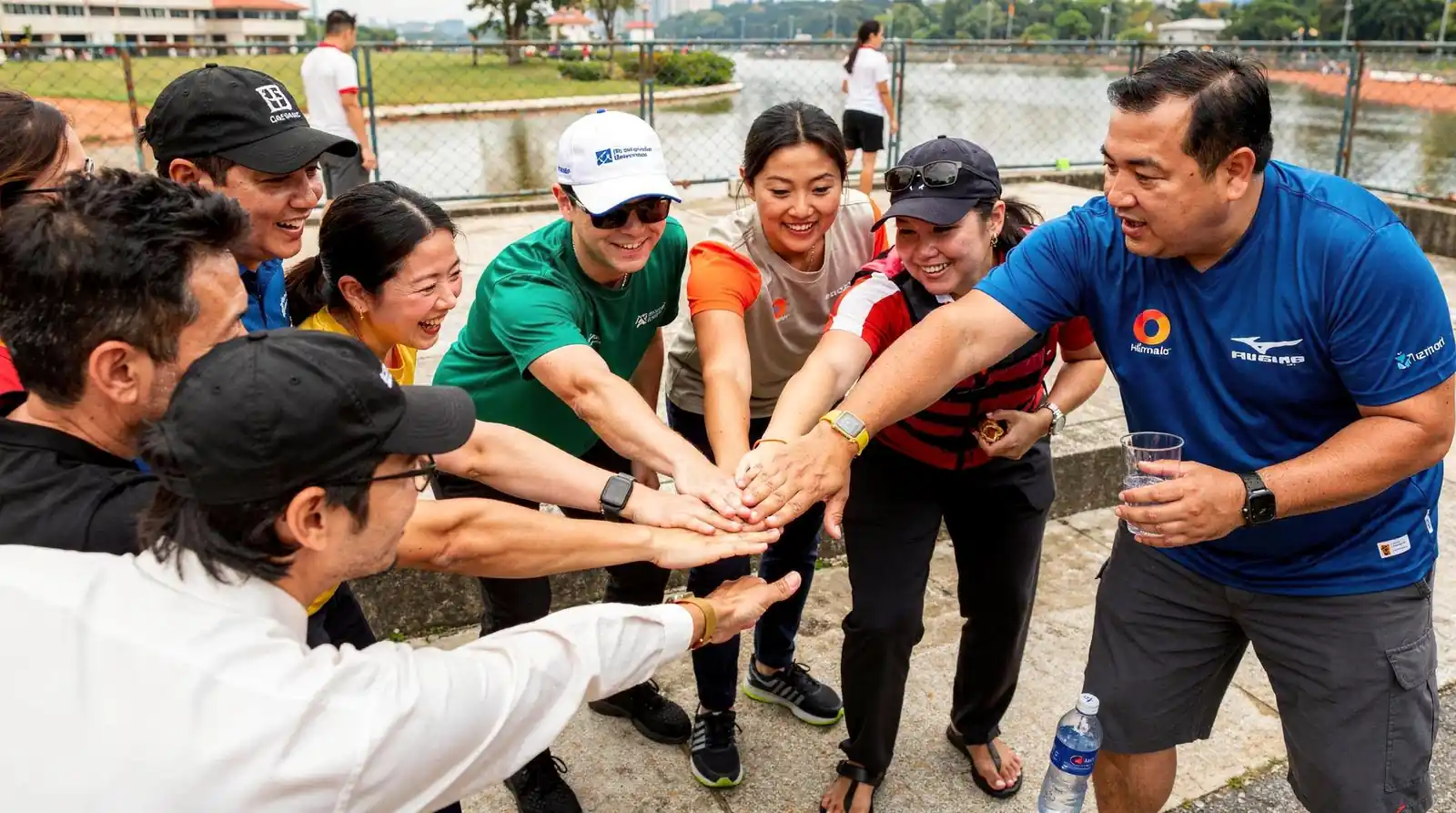
Structured team building converts wellness spending into measurable culture change. Trust, better problem-solving, and a unified workforce follow from well-designed activities, giving Singapore employers a tangible return beyond reduced sick days. Isolated perks rarely produce that shift; programs sequenced with intention do.
A well-run corporate wellness program singapore employers can point to actually links physical activity, recognition, and collaboration into one strategy rather than three disconnected initiatives.
Do sports-based events actually move engagement numbers?
Corporate Sports Day formats and Team Olympics-style events channel friendly competition into stronger team spirit. Adventour designs these formats to raise engagement while employees stay physically active together, not separately. Movement and morale reinforce each other in this setup, giving HR teams a wellness metric that’s easier to observe than absenteeism data alone.
Recognition matters just as much as movement. Employee Appreciation and Recognition Events, from gala dinners to themed appreciation days, are built to elevator morale and show staff that their wellbeing carries real organizational weight. That signal reduces burnout risk over time, a factor HR Directors already track closely when budgeting for retention.
What makes a wellness-linked event program deliver measurable results?
Full-lifecycle management makes results measurable. Adventour Singapore oversees each stage of an event. Planning, execution, and post-event reporting — so outcomes can be reviewed rather than assumed. This structure supports employee wellness sg initiatives that need to justify budget with evidence, not anecdotes.
Consider how the pieces connect:
- Sports Day/Team Olympics — drives engagement through healthy competition
- Appreciation events — boosts morale, signals investment in wellbeing
- Unique team-building formats — challenges teams and strengthens bonds
- End-to-end reporting — turns activity into trackable ROI data
Singapore-based unique team-building activities are crafted to inspire. Challenge participants, giving culture-building efforts a concrete, repeatable structure rather than a one-off event.
Which Metrics Prove Wellness Program Value?
Concrete outcomes prove wellness program value, not attendance counts or activity calendars. HR Directors in Singapore need evidence that stretches beyond feel-good testimonials. Measuring return matters to finance stakeholders, certainly, but it matters just as much to HR teams working to protect and expand their programs year over year. Budget approvals rarely survive on goodwill alone.
Offering benefits does not automatically translate into results. Research on workplace wellness has found that simply having a program in place isn’t enough to guarantee impact. Value comes from tracking what changes after implementation, not from the existence of the offering itself.
What should HR teams track when measuring workplace wellness ROI?
Executives evaluating a corporate wellness program in Singapore should look past participation rates toward behavioral and cultural shifts. Useful indicators include:
- Team cohesion, measured through post-activity feedback and manager observations
- Engagement scores tracked across quarterly pulse surveys
- Retention trends among participating departments versus non-participating ones
- Skill development reported by employees after facilitated sessions
Adventour structures its programs around this outcome-first approach. Sessions are designed to deliver measurable outcomes in team cohesion, engagement, and organizational culture. The same categories HR leaders already report on internally.
Do facilitated activities build lasting workplace relationships?
Yes. Participants in Adventour’s facilitated sessions consistently develop practical skills alongside stronger working relationships, according to reported outcomes from past programs. These effects extend past the event day itself. Colleagues who problem-solve together during a session carry that collaborative habit back into daily work.
For teams evaluating employee wellness in SG, the lesson is straightforward: track cohesion and engagement deliberately, don’t assume they’ll show up in a spreadsheet on their own. Programs that report on these metrics consistently earn renewed budget more easily than those that don’t.
How Does CSR And Family Day Programming Add Value?
CSR initiatives and Family Day events build culture from two different angles. Together they close a gap that standard team building often misses. Corporate Social Responsibility (CSR) programming empowers communities across Singapore, giving employees a shared purpose beyond office walls. Family Day events strengthen company culture by celebrating milestones and creating memorable experiences that employees share with spouses, children, and parents. Neither approach replaces the other; each solves a distinct engagement problem.
Programs that only reward performance risk feeling transactional. Bespoke appreciation events address this by celebrating milestones. Rewarding achievements through curated experiences, adding a recognition layer that pure CSR work doesn’t provide. Layering these formats gives HR directors in Singapore a fuller toolkit for measuring engagement beyond attendance numbers.
What Makes CSR Team Building Different From Standard Activities?
CSR-focused team building shifts the goal from internal bonding to external impact. Singapore teams work together toward outcomes that benefit local communities, which builds pride and purpose that standard icebreakers rarely achieve. This model suits organizations building a corporate wellness program singapore teams can point to as evidence of values in action.
Do Family Day Events Actually Improve Retention?
Retention data varies by organization. The mechanism is straightforward: employees who feel their families are welcomed report stronger emotional ties to the company. Family Day programming creates shared memories that outlast a single afternoon, reinforcing culture at home as well as at work.
Combining CSR, appreciation events, and structured employee wellness sg learning workshops gives leadership a layered employee engagement and wellness strategy. Learning and Development sessions equip participants with practical, applicable skills that improve both performance and cohesion, rounding out a calendar built for measurable, lasting impact rather than one-off morale boosts.
How Should Firms Plan Multi-Day Wellness Retreats?
Successful multi-day retreats start with a single point of accountability for logistics, programming, and on-site coordination. Firms planning a corporate wellness program in Singapore lose momentum fast when meeting facilitation, venue arrangements, and activity scheduling sit with different vendors. A unified plan prevents that fragmentation from the first day through the last.
Retreat design should pair structured business sessions with activities that build trust and resilience. Adventour’s multi-day conference and retreat programs combine professional meeting facilitation with team bonding exercises. Executives get boardroom outcomes alongside genuine connection. That dual focus matters most when leadership wants measurable culture shifts, not just a change of scenery.
What Does Full Retreat Management Actually Cover?
Full-service management spans three layers: logistics, programming, and on-site coordination. Adventour handles each layer across single-day and multi-day formats, which removes the administrative burden from internal HR teams. Programme design draws on more than 16 years managing corporate team-building initiatives across Southeast Asia, giving planners a track record to lean on rather than guesswork.
Which Activities Belong in a Wellness Retreat Agenda?
Outdoor adventure race formats give retreats a physical and mental challenge component. Teams complete structured tasks that demand communication under pressure, building resilience and a shared sense of accomplishment. These formats work well as a midpoint activity, breaking up long conference days without losing the retreat’s professional focus.
Firms evaluating retreat structure should weigh three planning priorities:
- Programme balance — pairing strategic sessions with physical, team-based challenges
- Logistics ownership — one provider coordinating venue, scheduling, and facilitation
- Experience depth — activities designed around resilience and communication outcomes, not novelty alone
Executives and People & Culture managers evaluating employee wellness SG initiatives should treat retreat planning as an integrated program, not a checklist of separate bookings. Coordinated design consistently produces stronger engagement outcomes than piecemeal event planning.
What’s The Next Step For HR Leaders?
Selecting a proven partner comes next for HR directors ready to move wellness planning from concept to execution. Singapore organizations lose engagement and retention value when programs stay generic or poorly measured. A corporate wellness program singapore teams can trust starts with a provider that has weathered market cycles and demonstrated results across industries.
Adventour Singapore brings over 18 years of experience to that decision, having served more than 1,500 corporate clients across the Asia-Pacific region. That track record matters when leadership asks for evidence, not promises. Recognition as a Top 10 Corporate Team Building Company in Asia further signals consistency HR teams can point to during budget reviews.
How Do HR Leaders Choose The Right Wellness Partner?
Scale and personal attention both matter. Adventour Singapore operates as a focused team of 10 employees based in Singapore, keeping communication direct and program design closely managed rather than handed off to layers of account managers. HR leaders benefit from that structure when timelines are tight and stakeholder needs shift mid-planning.
What Makes A Wellness Program Effective In Singapore?
Facilitation quality separates a memorable session from a forgettable one. Expert facilitators bring creativity and enthusiasm to every session, shaping activities that build genuine connection rather than passive attendance. Strong employee wellness sg initiatives depend on that energy translating into measurable participation and follow-through.
Practical next steps for HR directors include:
- Audit current wellness offerings against employee turnover and engagement data.
- Request a track record review from prospective providers, including client volume and industry reach.
- Confirm facilitator experience and program customization options before signing.
- Set measurable outcomes upfront — participation rates, retention shifts, engagement scores.
- Schedule a planning consultation to align program design with organizational goals.
Momentum matters more than perfection at the outset. Delaying action costs organizations continued turnover risk and disengaged talent pools.
Frequently Asked Questions
What ROI can Singapore companies expect from a corporate wellness program?
Corporate wellness programs in Singapore typically deliver 3-6x the invested cost through reduced absenteeism and lower healthcare claims. The exact multiple depends on how well a program targets preventable-cost drivers and how consistently outcomes are tracked over time.
What’s the difference between ROI and VOI in wellness program measurement?
ROI measures the direct financial return per dollar spent, such as lower healthcare claims. VOI (value on investment) captures benefits that resist a clean dollar figure, including stronger engagement, a healthier workplace culture, and improved retention. HR leaders increasingly track both together for a fuller picture of program impact.
Which metrics should HR teams track beyond participation numbers?
Useful indicators include team cohesion measured through post-activity feedback, engagement scores from quarterly pulse surveys, retention trends among participating versus non-participating departments, and skill development reported after facilitated sessions. Attendance alone rarely proves program value to finance stakeholders.
How experienced is Adventour Singapore in designing corporate wellness programs?
Adventour Singapore brings over 18 years of experience to corporate wellness and team-building programming, having served more than 1,500 corporate clients across the Asia-Pacific region. The company has also been recognized as a Top 10 Corporate Team Building Company in Asia.
What activities typically make up a Singapore corporate wellness program?
A well-rounded program combines Sports Day or Team Olympics-style events, appreciation and recognition events, CSR initiatives, Family Day programming, learning and development workshops, and multi-day retreats. Layering these formats gives HR directors a fuller toolkit for building engagement beyond a single event.