
Master Effective Team Communication Strategies Today

Effective Team Communication Strategies to Enhance Collaboration
Effective team communication is the deliberate practice of sharing information, aligning expectations, and coordinating action so teams deliver work reliably and with higher morale. This article explains why effective team communication strategies matter, the core principles that underpin healthy team dialogue, and practical methods to remove common barriers such as silos, conflict, and remote friction. Readers will learn evidence-informed tactics—active listening, constructive feedback, and psychological safety—that improve collaboration, reduce rework, and strengthen cross-functional flow. Practical tool guidance, measurement approaches, and activity-based interventions are included to help teams adopt repeatable habits and track improvements. The guide maps core principles to operational tools, offers step-by-step remediation for common problems, and shows how experiential learning translates theory into practice through specialist programs. By the end you will have clear actions, short checklists, and examples to boost communication in both co-located and hybrid teams.
Why Are Effective Team Communication Strategies Crucial for Corporate Success?
Effective team communication is the set of practices and norms that reduce misunderstanding, accelerate decision-making, and increase team resilience by making work visible and expectations explicit. Clear mechanisms—shared language, feedback loops, and documented agreements—produce measurable reductions in errors and faster handoffs, which directly impact productivity and retention. Teams that prioritize communication create higher employee engagement because people feel heard and understand their role in outcomes. These foundations lead naturally into assessing specific impacts on productivity and morale and into building psychological safety to sustain open dialogue.
What Impact Does Communication Have on Team Productivity and Morale?
Strong communication increases throughput by reducing rework and unnecessary waiting, and it bolsters morale through clearer role expectations and fewer interpersonal surprises. Recent studies and organizational audits show communication breakdowns frequently cause missed deadlines and duplicated work, which erodes trust and motivation. Teams that implement simple practices like clarified meeting agendas and defined handoff protocols often report faster cycle times and improved satisfaction surveys. Tracking metrics such as average handoff time and frequency of clarifying questions helps quantify improvements and guides next steps.
How Does Psychological Safety Enhance Open Communication in Teams?
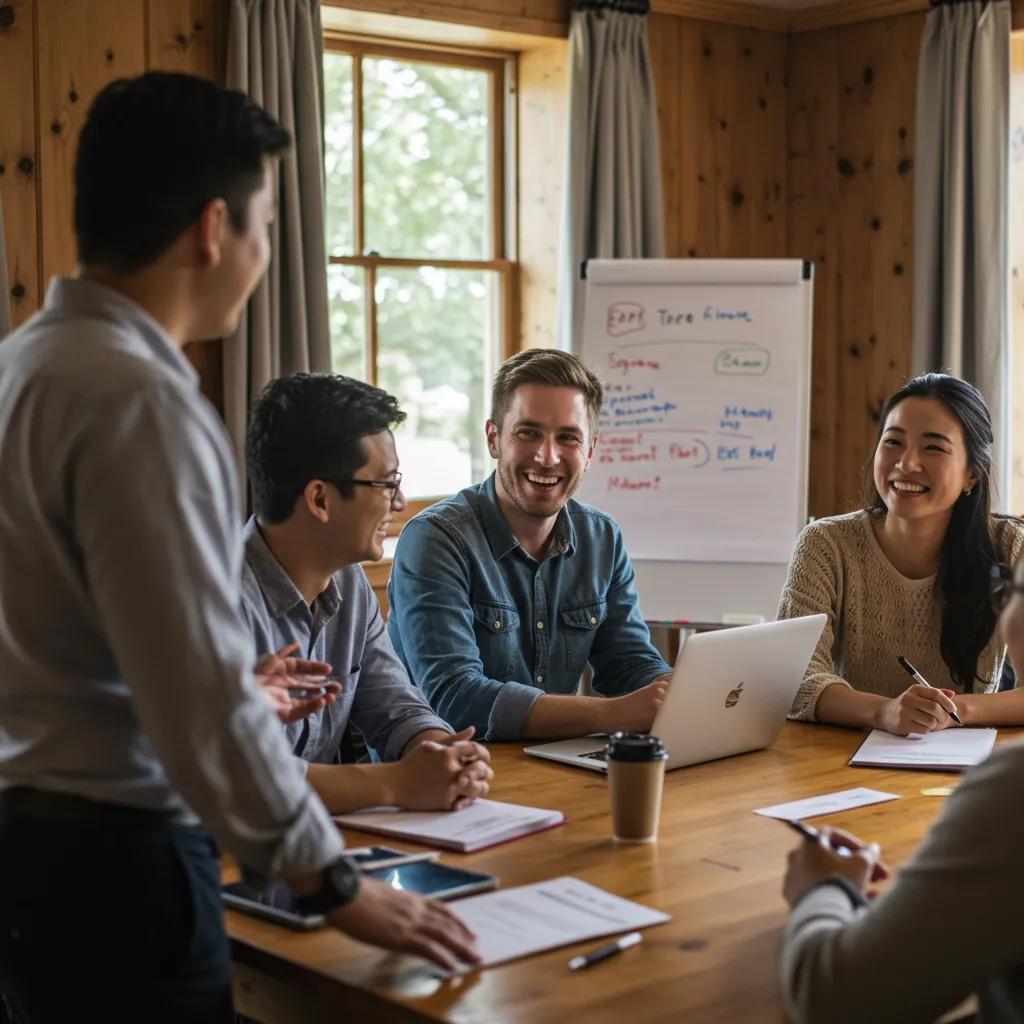
Psychological safety is the shared belief that team members can speak up, admit mistakes, and offer ideas without fear of humiliation or punishment, and it operates by reducing the personal risk of candour. When psychological safety rises, teams escalate issues earlier, share partial information faster, and engage in constructive debate that surfaces better solutions. Leaders promote safety through practices such as inviting input, normalizing occasional failure as learning, and responding appreciatively to questions. These actions create a feedback-rich environment where active listening and timely feedback can flourish.
What Are the Common Communication Challenges in Corporate Teams?
Corporate teams commonly face silos, unclear priorities, inconsistent feedback, and remote/hybrid friction, each of which interrupts information flow and decision alignment. Silos limit visibility across functions and create duplicated effort, while unclear priorities produce conflicting task choices and missed deliverables. Inconsistent feedback reduces learning and development, and remote work often creates asynchronous gaps that amplify misunderstanding. Recognizing these barriers is the first step toward targeted remediation that restores coordination and clarifies expectations.
What Are the Core Principles of Effective Team Communication?
Core principles are the repeatable norms that shape daily interactions: psychological safety, clarity, active listening, and constructive feedback, all supported by agreed channels and rhythms. Each principle functions as a mechanism that reduces cognitive load, aligns action, and increases predictability across tasks and relationships. Applying short rituals—pre-meeting briefs, recap emails, and structured debriefs—turns principles into habits that teams can measure. These foundations enable practical micro-exercises and governance that sustain improved communication over time.
How Does Active Listening Improve Team Understanding and Collaboration?
Active listening is the practice of paraphrasing, asking clarifying questions, and checking assumptions to ensure mutual understanding and avoid costly rework. This method works by replacing inference with confirmation, which reduces errors and clarifies intent during handoffs and complex problem solving. Teams can practice a quick meeting ritual: one speaker, one paraphrase, one clarifying question, then a confirmation of next steps. Over time this ritual reduces ambiguity and creates a pattern for respectful, efficient exchanges.
Why Is Constructive Feedback Essential for Team Growth?
Constructive feedback is a structured exchange that identifies behaviour, impact, and future actions so individuals can adjust performance without defensiveness. Using simple frameworks—such as Situation-Behavior-Impact—keeps feedback specific, timely, and actionable, which increases learning and reduces repeat mistakes. When feedback is regular and normalized, teams accelerate skill development and align behaviours with shared goals. Embedding short feedback cycles in project retrospectives creates sustained improvement and clearer expectations.
How Can Teams Build Psychological Safety for Better Communication?
Building psychological safety requires leader behaviours and team rituals that make speaking up low-risk and visibly rewarded, such as inviting dissent, celebrating small failures, and rotating facilitation. Practical cues to monitor include frequency of questions, number of ideas shared per meeting, and willingness to propose novel solutions. Small, consistent actions—explicitly asking quieter members for input and acknowledging contributions—signal inclusion and create upward momentum. Measuring these indicators guides leaders to reinforce the most effective practices.
How Can Teams Overcome Communication Challenges in the Workplace?
Overcoming communication challenges involves diagnosis, targeted interventions, and measurement so improvements are reliable and repeatable rather than ad hoc. Common tactics include structured conflict protocols, cross-functional rituals, and explicit async norms for remote teams; these tactics reduce escalation and increase throughput. Implementing simple KPIs—such as response SLAs for async questions and cycle-time for handoffs—turns soft improvements into measurable outcomes. Practical interventions can be supplemented by short experiential workshops or bespoke programs that translate learning into team routines.
What Strategies Resolve Conflicts Through Effective Communication?
Conflict de-escalation follows a predictable sequence: pause and acknowledge emotion, restate positions, identify shared goals, and agree on a next-step experiment to test solutions. This structured dialogue reduces personalization of issues and redirects energy to problem-solving, which shortens resolution time and preserves relationships. Leaders can use scripted phrases—“I hear that…”, “Help me understand…”, “Can we try…”—to reframe interactions into collaborative problem-solving. Rehearsing this protocol in low-stakes settings increases fluency when higher-stakes conflicts arise.
How Can Teams Break Down Communication Silos Across Departments?
To break silos, teams create cross-functional rituals such as regular syncs, shared dashboards, and designated liaisons who translate priorities between groups and maintain continuity. These mechanisms increase transparency, reduce duplicated work, and align upstream and downstream expectations. Quick wins include instituting a weekly 15-minute cross-team status update and assigning rotating representatives for key projects. Over time, these rituals become governance that reduces friction and accelerates collaboration across the organisation.
What Are Best Practices for Remote and Hybrid Team Communication?
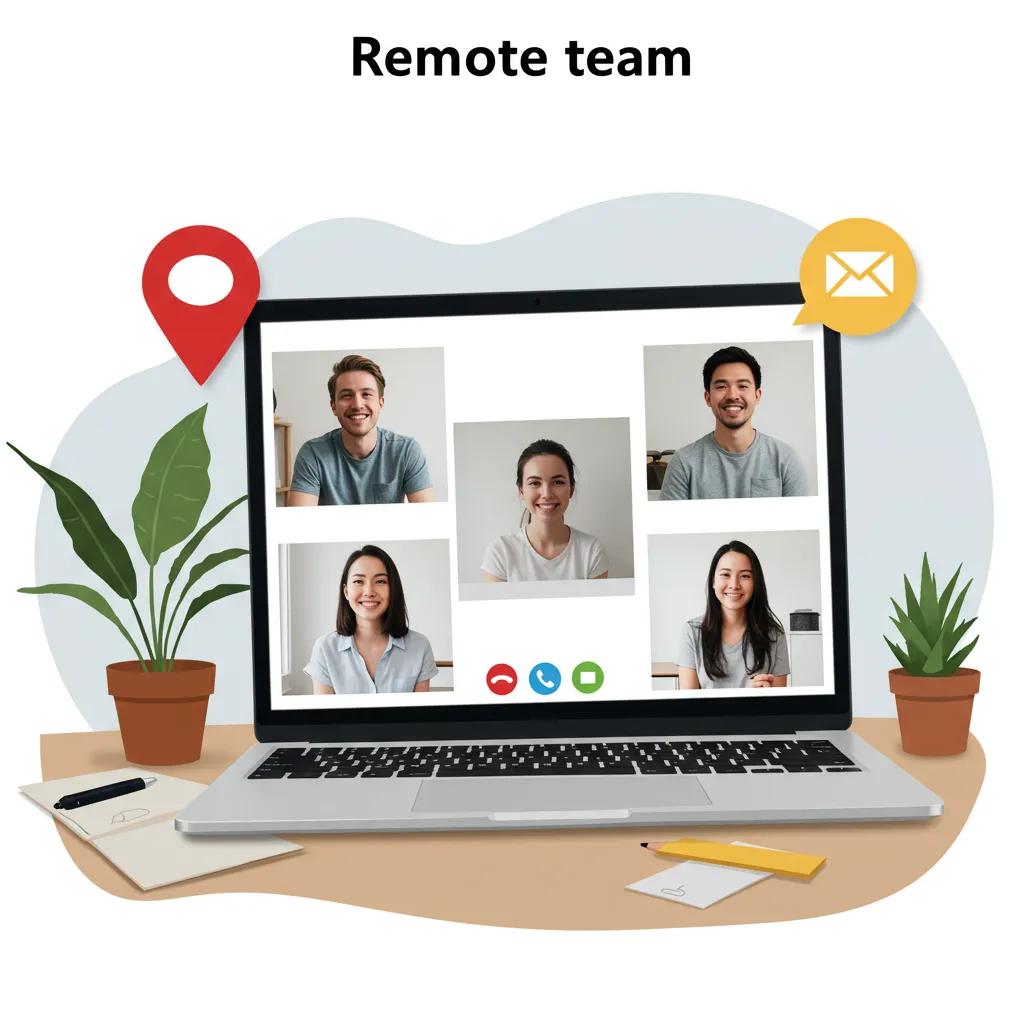
Remote and hybrid teams perform best when they combine clear async norms, disciplined meeting cadences, and accessible documentation so knowledge remains discoverable and decisions are visible. Best practices include defining response time expectations, keeping meetings time-boxed with clear agendas, and capturing decisions in a shared repository. Tools alone won’t fix norms; teams must agree on usage rules and enforce them consistently. These practices reduce redundant meetings, improve inclusivity, and keep distributed teams aligned.
After this section, teams seeking practical short-term interventions can consider bespoke team-building solutions that convert theory into practiced habits. Adventour Singapore offers Team Building Programs (Indoor, Outdoor, Overseas, CSR) that can be tailored to focus on breaking silos, practicing conflict protocols, and rehearsing remote/hybrid norms in safe simulated environments. These experiential programs reinforce communication habits by placing teams in scenario-based activities that require the very behaviours they want to adopt.
Breakthrough Communication: Hybrid Learning for Team Skill Development
This paper describes the research foundation and instructional design ofBreakThrough Communication, an evidence-based hybrid learning enterprise that builds organizational capacity by boosting communication skill in individuals and teams. BTC’s tiered talent development program combines asynchronous, self-paced video instruction in foundational knowledge; live virtual workshops customized to engage learners in practicing new skills on organizational challenges they face; and change-sustaining follow-through to embed new skills through assessment, video reinforcers, and real-time practice sessions. A certificate program that prepares internal trainers to assume communication coach roles completes the process. The BTC learning system is grounded in the traditional pedagogy of the communication field, aligns with adult learning theory, and reflects recent neuroscience research on how the human brain most efficiently learns. Three distinct areas of communication skill comprise the program’s subject material: interpersonal conflict, teamwork, and persuasive speaking. The communication models within each area have been validated in both experimental and field studies, shown to change behavior and affect outcomes.
Breakthrough communication in a hybrid world: Amplifying interactive, experiential learning, 2022
Which Communication Tools and Channels Optimize Team Collaboration?
Choosing tools depends on whether the priority is synchronous coordination, knowledge preservation, or project orchestration; the right channel reduces noise and accelerates action. Synchronous chat is ideal for quick coordination, documented threads or wikis are best for knowledge, and project management platforms serve long-lived task orchestration. Security, compliance, and integration capacity also shape enterprise choices and should guide governance decisions. Below is a compact comparison to help match tool selection to common needs.
Digital platforms compared by typical corporate needs:
| Platform Type | Best For | Key Consideration |
|---|---|---|
| Real-time chat (e.g., channels) | Quick coordination and team updates | Use channels and threads to reduce noise and keep context |
| Project management boards | Task ownership and visual workflows | Ensure tasks link to decision records and deadlines |
| Knowledge repositories | Policies, SOPs, and searchable decisions | Maintain version control and clear taxonomy |
How Do Digital Platforms Like Slack and Microsoft Teams Enhance Communication?
Digital platforms provide persistent channels, searchable history, and integrations that automate routine updates, which reduces coordination overhead and keeps context available. They work by centralizing conversations and connecting to tools like calendars and task trackers, making work signals more discoverable. Adoption succeeds when teams set naming conventions, channel purposes, and lightweight norms for message priority. Training and short adoption rituals ensure these platforms reinforce clarity rather than increase distraction.
When Should Teams Use Face-to-Face Versus Virtual Communication?
Choose face-to-face for high-sensitivity conversations, complex negotiations, or when relationship building is primary; choose virtual channels for routine coordination and information sharing. Decision criteria include the conversation’s emotional intensity, complexity, and the need for rapid iteration versus record-keeping. Two practical examples: kickoffs and performance conversations benefit from in-person presence, while status updates and document reviews suit async methods. Applying a quick checklist—sensitivity, complexity, relationship—helps teams select the right modality.
What Are the Best Communication Tools for Different Team Needs?
Map team needs to tool families: coordination → chat, project coordination → boards, knowledge management → wiki or docs, synchronous deep work → video with facilitation. Integrations between these tools reduce manual updates and keep single sources of truth, while governance prevents duplication and fragmentation. When choosing tools, prioritize interoperability, discoverability, and clear ownership to maintain signal-to-noise. Effective tool choice is reinforced by practice; Adventour Singapore’s experiential workshops can help teams rehearse tool-based collaboration in realistic scenarios through Team Building Programs (Indoor, Outdoor, Overseas, CSR).
| Need | Tool Type | Example Application |
|---|---|---|
| Coordination | Chat channels | Quick clarifications and standup notes |
| Task orchestration | Project boards | Sprint planning and task handoffs |
| Knowledge retention | Wikis/docs | SOPs and decision logs |
How Does Adventour Singapore’s Team Building Programs Improve Communication Skills?
Adventour Singapore translates communication theory into experiential practice through bespoke indoor, outdoor, overseas, and CSR programs that focus on observable behaviours and measurable outcomes. Experiential design forces teams into interdependent tasks where communication, role clarity, and feedback matter for success, and instructors coach observable practices rather than only giving theory. Programs include the Modified DISC Workshop to surface communication styles and tailored activities that rehearse desired behaviours under time pressure and interdependence. The following table links specific programs to the communication skills they develop and the tangible learning values teams gain.
| Program | Communication Skill Developed | Learning Value |
|---|---|---|
| Modified DISC Workshop | Understanding communication styles | Faster, clearer handoffs and reduced misinterpretation |
| Amazing Race | Strategic coordination under time pressure | Role clarity and rapid decision-making |
| Squid Games | Rapid problem-solving in teams | Clear briefing and adaptive roles |
| Running Man | Real-time coordination and trust | Improved on-the-spot communication and leadership |
What Communication Benefits Do Modified DISC Workshops Provide?
Modified DISC Workshops help teams identify dominant communication preferences by mapping behaviours to understandable profiles, which reduces misinterpretation and speeds alignment. Knowing colleagues’ profiles allows teams to tailor messages, adjust meeting styles, and plan handoffs with greater empathy. Practically, teams report clearer delegation and fewer cross-purpose assumptions after applying DISC insights in meetings and project planning. Embedding follow-up micro-actions ensures the workshop translates into sustained behaviour change.
How Do Team Building Activities Like Amazing Race Foster Collaboration?
Activities like Amazing Race create task interdependence, time pressure, and clear success criteria, forcing teams to practice concise briefing, delegated roles, and rapid feedback loops. The mechanics push teams to experiment with coordination patterns and immediately see the consequences of unclear communication, which accelerates learning. Key transferable behaviours include concise briefings, explicit role assignments, and structured debriefs that capture lessons for future work. Repeating debriefs after activities cements the new routines into day-to-day operations.
What Success Stories Demonstrate Communication Improvements with Adventour?
Measured outcomes from experiential interventions often include faster cross-team handoffs, increased frequency of constructive feedback, and clearer role ownership documented in follow-up surveys and KPIs. For example, teams that practice targeted scenarios show reduced handoff times and higher confidence in decision making during post-program assessments. Adventour Singapore’s approach pairs short pre/post assessments with observable coaching to create clear metrics for improvement. Teams interested in tailored programs like Team Building Programs (Indoor, Outdoor, Overseas, CSR) or the Modified DISC Workshop can leverage these formats to create measurable improvements in communication and collaboration.
- Common interventions include structured debriefs, role clarity exercises, and short follow-up coaching sessions.
- Measurement approaches combine simple KPIs (handoff time, feedback frequency) with participant reflection surveys.
- Bespoke experiential design ensures activities map directly to the behaviours a team needs to practice.
These practices help teams close the loop between learning and on-the-job performance, making communication improvements durable and measurable.
About AdvenTOUR
With over 20 years of experience and a proven track record, AdvenTour specializes in curating unique team building experiences in Singapore that foster teamwork, communication, and collaboration. Whether you're planning a small team bonding session or a large corporate retreat, we tailor every event to your goals and budget.
Quick Links
Informative Blogs
Contact Us
Call or Whatsapp:
(65) 8915 4522
Email:
info@adventour.com.sg